Nearly 60% of U.S. women have tried a major diet in the last five years. But many don’t see lasting results. The Mediterranean Diet for Women offers a better way for lasting weight loss and better health.
The Mediterranean diet for weight loss for woman is a proven plan. It focuses on extra-virgin olive oil, vegetables, fruits, whole grains, and legumes. It also includes nuts, seeds, and lean proteins like fish. Moderate dairy, limited red meat, and optional red wine are part of it too.
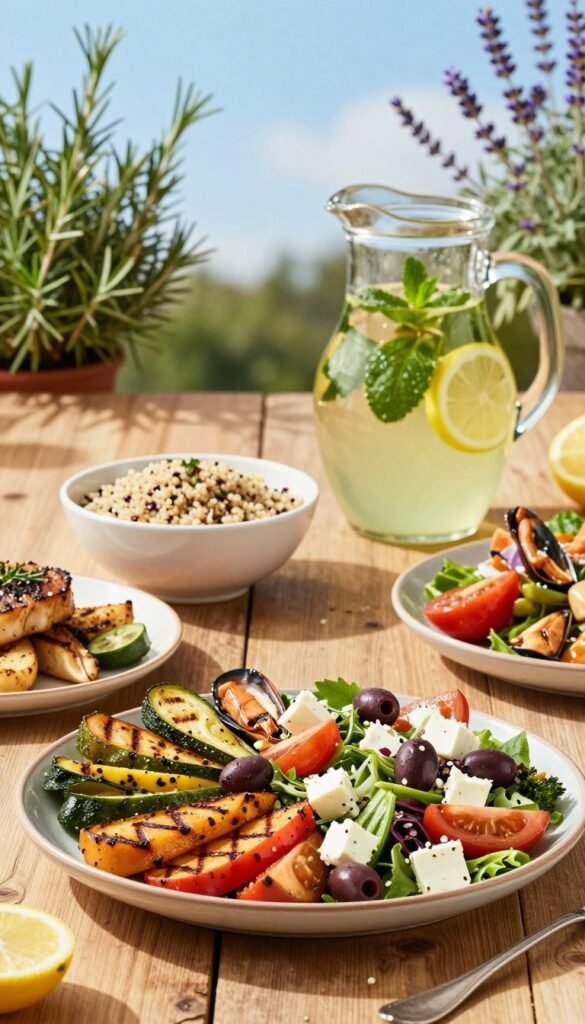
We aim to help you eat healthy for weight loss and heart health. It also improves blood sugar and mental well-being. This diet is not a quick fix but a lifestyle change. It includes meal planning, portion control, and exercise for all life stages.
In this article, we’ll show how the Mediterranean Diet for Women works. We’ll provide practical tips for busy lives and adjustments for everyone. This way, women in the U.S. can make lasting changes.
Why the Mediterranean Diet Works for Women’s Weight Loss
The Mediterranean diet focuses on whole foods and balanced nutrients for lasting change. Studies show it leads to moderate weight loss and less belly fat. The PREDIMED study highlights its benefits for heart health and long-term outcomes.
Scientific evidence supporting weight management
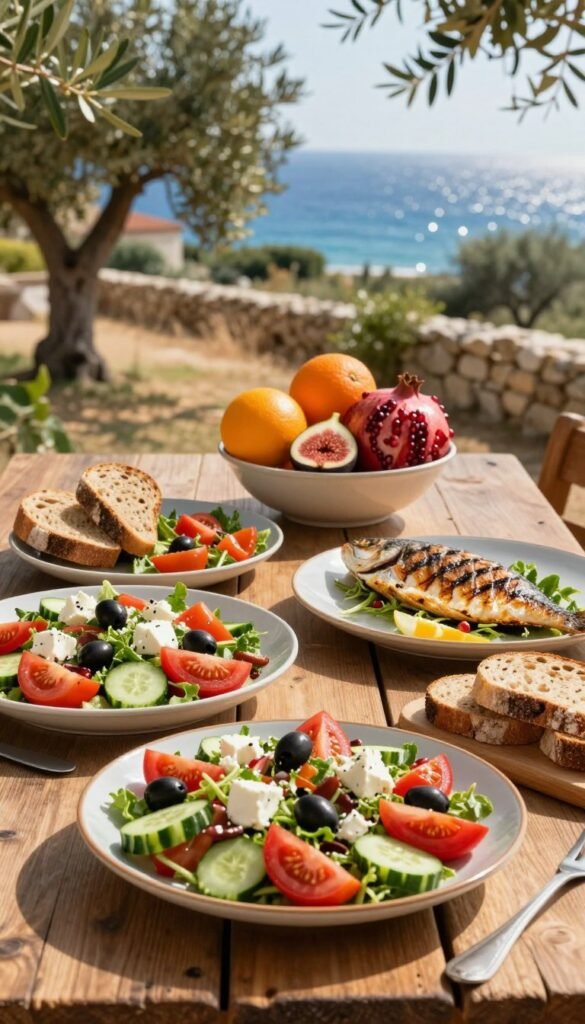
Research consistently shows the Mediterranean diet’s benefits. It helps lose belly fat and keeps weight off better than low-fat diets. It also improves blood fats, reduces inflammation, and lowers heart disease risk.
How the diet targets women’s metabolic and hormonal needs
The Mediterranean diet boosts metabolic health with fiber, protein, and healthy fats. It keeps you full and reduces calorie intake. It also improves blood fats and insulin sensitivity.
It’s good for women’s health, considering hormonal changes. It helps with weight gain during menopause. Adequate protein and phytoestrogens from legumes and whole grains support estrogen levels.
Benefits beyond weight loss: heart health and longevity
The Mediterranean diet offers more than just weight loss. It lowers heart disease, stroke, and diabetes risk. It also reduces inflammation and supports brain health.
| Key Mechanism | What It Does | Relevance to Women |
|---|---|---|
| High fiber & protein | Increases satiety, reduces total calorie intake | Helps preserve lean mass during hormonal transitions |
| Healthy fats (olive oil, nuts) | Improves lipid profile and insulin sensitivity | Reduces central fat and supports metabolic health |
| Lower refined carbs | Stabilizes blood sugar and lowers glycemic load | Limits fat accumulation tied to insulin resistance |
| Phytoestrogens & micronutrients | Provides mild hormonal modulation and nutrient density | Assists during perimenopause and menopause |
| Anti-inflammatory pattern | Reduces chronic inflammation linked to cardiometabolic risk | Supports long-term women’s health and longevity |
Remember, diet is just part of the equation. Exercise, sleep, and stress management are key. Combining the Mediterranean diet with physical activity boosts weight loss and metabolic health. This holistic approach is backed by science and offers lasting benefits for women’s health.
Meditarranean diet for weight loss for woman
We offer a detailed look at a diet plan for women aiming for steady weight loss and better health. It focuses on plant-based meals, with lots of vegetables and fruits. Whole grains, legumes, and fish are key, while olive oil is the main fat. It also includes moderate dairy and limits processed foods and sugars.
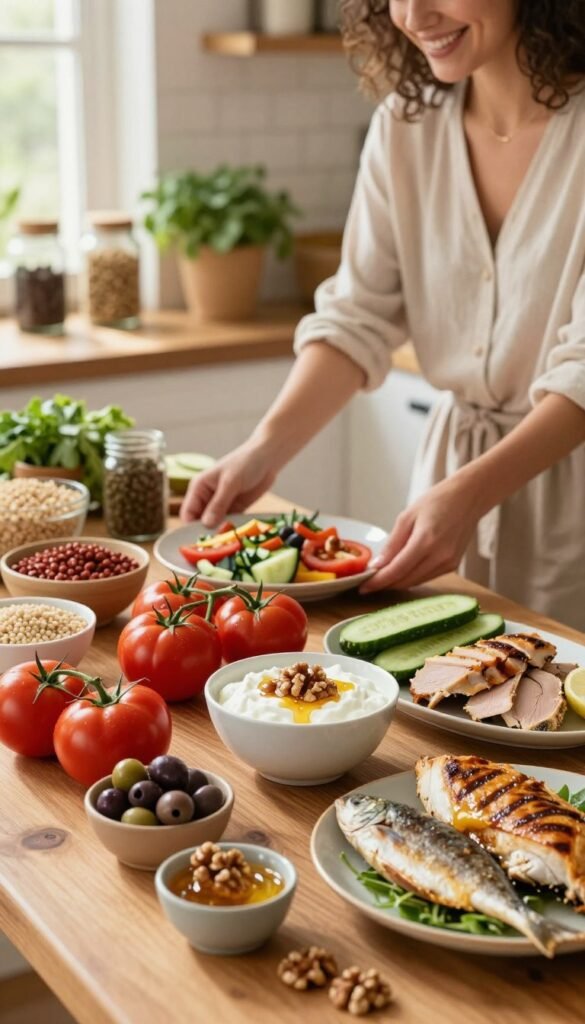
The diet’s core foods are vegetables, fruits, whole grains, beans, and fatty fish. It also includes olive oil, nuts, and herbs. This mix provides fiber, protein, and healthy fats for fullness and energy.
We compare this diet to fad diets, showing their differences. Fad diets promise quick results and often cut out food groups. Our Mediterranean diet is flexible and focuses on quality and enjoyment, not strict rules.
We set realistic goals for weight loss. Women can lose 0.5–1 pound a week with small calorie cuts and more exercise. Early benefits like more energy and better digestion can happen in weeks. Blood pressure and lipids may improve in months with consistent following.
Remember, results vary based on age, weight, activity, and health. Set achievable goals, add exercise, and track progress in a healthy way.
| Aspect | Mediterranean Approach | Typical Fad Diet |
|---|---|---|
| Core foods | Vegetables, fruits, whole grains, legumes, fish, olive oil, nuts | Isolated food groups, shakes, or single-food focus |
| Flexibility | High; adaptable to culture, taste, and budget | Low; prescriptive menus and strict rules |
| Sustainability | Designed for long-term adherence | Often short-term, hard to maintain |
| Health focus | Evidence-based benefits for heart, metabolic health, and weight | Weight loss prioritized over long-term health |
| Expected timeline | Gradual weight loss; early energy gains; clinical benefits in months | Rapid initial weight loss; frequent regain after stopping |
| Practical tip | Build meals around core foods and moderate portions | Follow strict meal plans or supplement schedules |
Key Foods to Emphasize in a Women’s Mediterranean Nutrition Plan
We focus on practical, nutrient-rich choices that support weight management and overall health. Below we highlight the key foods to include, portion tips, and simple cooking notes to make mediterranean recipes easy to follow in daily life.
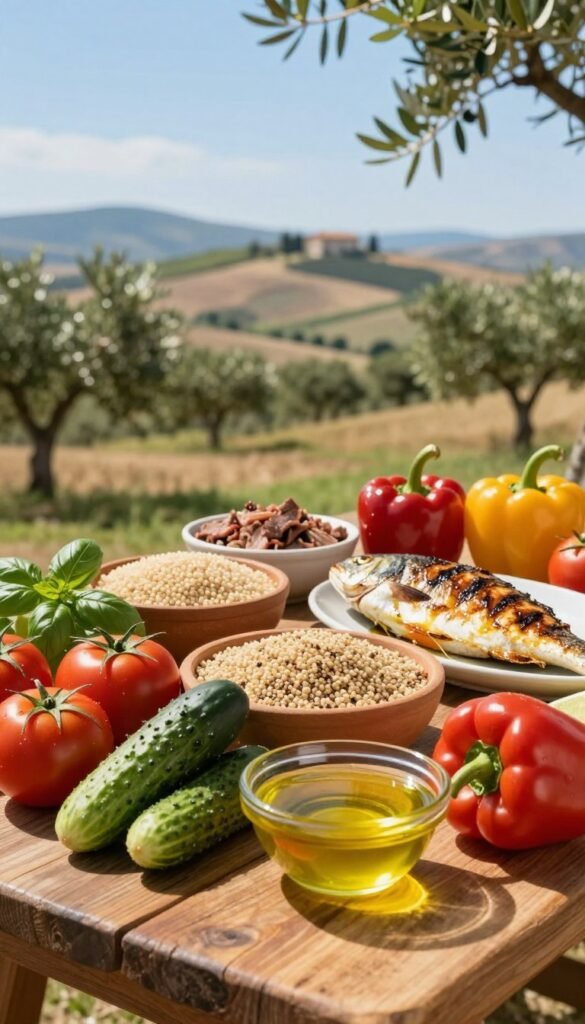
Healthy fats: olive oil, nuts, and seeds
Extra-virgin olive oil is our go-to for cooking and dressing. It adds flavor, polyphenols, and monounsaturated fats that support heart health. Use it for sautéing vegetables, finishing soups, or in vinaigrettes.
Nuts such as almonds, walnuts, and pistachios offer omega-3 precursors, protein, and satiety. Seeds like chia and flax supply fiber and plant-based omega-3s. Because nuts are calorie-dense, we advise about 1 oz servings to control intake while enjoying benefits.
Lean proteins: fish, legumes, and poultry
We prioritize oily fish—salmon, sardines, and mackerel—two or more times per week for omega-3s and high-quality protein. These choices support muscle preservation and inflammation control.
Legumes such as lentils, chickpeas, and beans deliver plant protein, fiber, and iron-binding benefits. Poultry and eggs are flexible, lean animal protein options for quick meals and snacks. If we follow mostly plant-based menus, fortified foods or supplements can help meet B12 needs.
Whole grains, fruits, and vegetables for fiber and satiety
We choose whole grains like farro, barley, brown rice, and whole-wheat pasta to provide steady energy and fiber. These carbohydrates help control hunger between meals.
Fruits and vegetables supply micronutrients, antioxidants, and low-calorie volume that promote fullness. We favor seasonal produce and a range of colors to maximize vitamins and phytonutrients. Yogurt and fortified milk help with calcium and vitamin D, while modest portions of lean red meat can boost iron when needed.
We rely on herbs and spices—oregano, basil, garlic, and lemon—to add flavor and cut back on salt. For women balancing nutrient needs in different life stages, paying attention to calcium, vitamin D, iron, B12, and omega-3s ensures a complete plan that pairs well with mediterranean recipes.
| Food Group | Top Picks | Serving Guideline | Key Benefit |
|---|---|---|---|
| Healthy fats | Extra-virgin olive oil; almonds, walnuts, pistachios; chia, flax | 1 tbsp oil; 1 oz nuts; 1–2 tbsp seeds | Heart-healthy fats, polyphenols, satiety |
| Lean proteins | Salmon, sardines, mackerel; lentils, chickpeas, beans; poultry, eggs | 2+ fish servings/week; ½–1 cup cooked legumes; 3–4 oz poultry | Omega-3s, protein for muscle, fiber from legumes |
| Whole grains | Farro, barley, brown rice, whole-wheat pasta | ½–1 cup cooked per meal | Sustained energy, fiber |
| Fruits & vegetables | Seasonal berries, citrus, leafy greens, cruciferous veg | 3–5 servings veggies; 2–3 servings fruit daily | Vitamins, antioxidants, low-calorie volume |
| Dairy & fortified | Greek yogurt, fortified plant milk | 1 cup yogurt or fortified milk equiv. | Calcium, vitamin D, protein |
Meal Planning and Practical Mediterranean Meal Plan Ideas
We offer a simple way to make the Mediterranean diet work for busy women. Use a flexible meal plan that includes veggies for breakfast, protein and carbs for lunch, and fish or poultry or legumes for dinner. Add healthy snacks to keep hunger at bay.
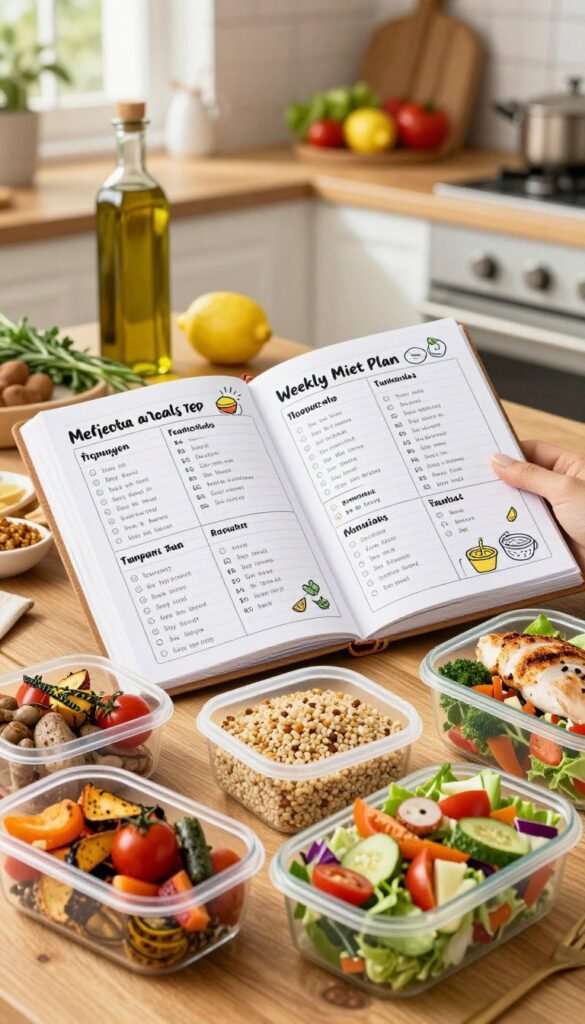
Weekly meal template tailored for busy women
Try a 7-day meal plan that you can adjust as needed. Mix things up each day to keep healthy eating fun and doable. Spend a few hours on the weekend cooking in bulk to make weekdays easier.
Day 1–7 template:
| Meal | Focus | Examples |
|---|---|---|
| Breakfast | Vegetable-forward, protein-rich | Greek yogurt with berries and walnuts; avocado toast with tomato and olive oil; savory oats with spinach and feta |
| Lunch | Grains + protein + veggies | Farro or brown rice bowl with chickpeas and roasted vegetables; tuna salad with mixed greens and whole-wheat pita |
| Dinner | Fish/poultry/legume-based | Baked salmon with quinoa and roasted asparagus; chicken cacciatore with peppers; lentil stew with kale |
| Snacks | Nutrient-dense, portable | Hummus with carrot sticks; small handful of almonds; fresh fruit |
Breakfast, lunch, dinner, and snack examples
Start your day with something quick and easy. Greek yogurt with berries, walnuts, and honey is a fast choice. Avocado toast on whole-grain bread is great for a quick bite.
Lunch should be easy to take with you. Try a grain bowl with farro, chickpeas, and veggies. Or, pack tuna salad in a whole-wheat pita.
Dinner can be fast and flavorful. Baked salmon with lemon and herbs is quick. Lentil stew or chicken cacciatore makes plenty for leftovers.
Choose snacks that are filling but not too heavy. Hummus and veggies, almonds, or fruit are good choices. They help keep you full until your next meal.
How to shop and prep to stay consistent
Make a shopping list to save time at the store. Buy veggies like leafy greens, tomatoes, and peppers. Fruits like berries and citrus are good too. Don’t forget proteins like tuna, chicken, and beans, and whole grains like brown rice and farro. Healthy fats like olive oil and nuts are important, along with Greek yogurt and herbs for flavor.
Meal prep can save you time and money. Cook grains, legumes, and veggies on the weekend. Portion them out and freeze for later. This way, you can quickly make a meal on a busy day.
Use shortcuts like sheet-pan dinners and slow-cooker stews. Frozen produce and canned fish are affordable and convenient. They help you stick to your meal plan without breaking the bank.
Portion Control and Weight Loss Tips Aligned with the Mediterranean Diet
We focus on making portion control easy with a Mediterranean diet. Small changes, like adjusting plate sizes and meal pace, help manage calories without strict tracking. These habits support lasting weight loss tips for daily life.
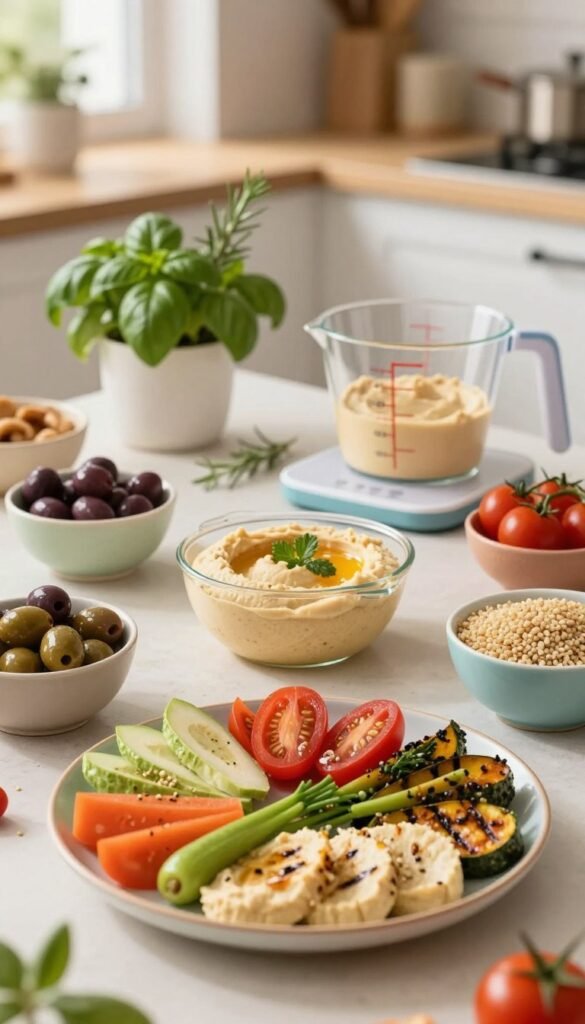
Portion-sizing strategies without rigid calorie counting
We use the plate method: half for veggies, one-quarter for protein, and one-quarter for grains. We also use hand sizes: palm for protein, cupped hand for carbs, fist for veggies.
Measuring tools help for the first few weeks. Pre-portioning nuts and snacks in small containers stops overeating.
Mindful eating practices to prevent overeating
We encourage mindful eating: no screens, slow chewing, and listening to hunger and fullness. Waiting 10–15 minutes before seconds helps us know when we’re really hungry.
Fiber- and protein-rich Mediterranean meals keep us full. Eating protein at each meal helps keep muscle and manage calories.
Adapting portions for different activity levels
We adjust portions based on how active we are. For less active days, we cut down on grains and focus on veggies and protein. On moderately active days, we keep portions balanced. For very active days, we add more protein and healthy snacks.
We stress making it personal by age, metabolism, and goals. Small changes to portions and meal timing help match our energy needs without complicated math.
Practical habits include avoiding big serving dishes when trying to lose weight. Always have a protein source at each meal. Carry pre-measured snacks for busy days. These habits connect mindful eating with effective calorie management and reliable weight loss tips.
Sample Mediterranean Recipes That Support Healthy Eating
We have a set of recipes that make eating healthy easy and fun. These recipes focus on balance and taste, and they don’t take long to prepare. They are perfect for busy mornings and family dinners.
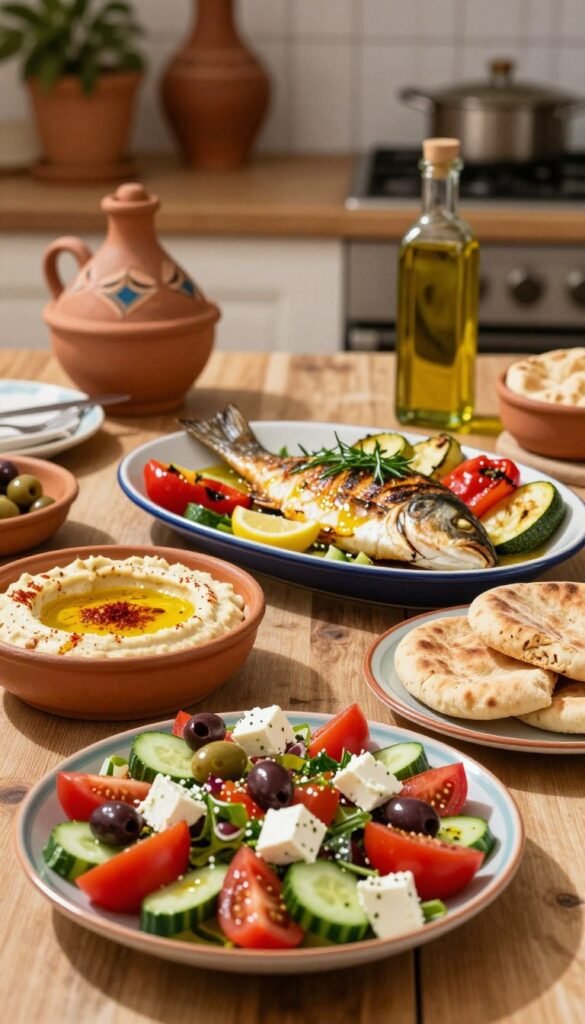
Quick breakfast recipes to kickstart metabolism
Try a Greek yogurt parfait with mixed berries, chia seeds, and walnuts. It takes just 5 minutes to make. The yogurt and berries keep you full and alert.
Make a Mediterranean omelet with spinach, tomatoes, olives, and feta. It’s ready in 8–10 minutes. Eggs give you protein and keep you satisfied in the morning.
For a slow energy boost, try overnight oats with almond milk, figs, and cinnamon. It’s just 5 minutes of prep time, then chill overnight. Oats are good for steady energy.
Simple lunches and dinners for family-friendly meals
Grill salmon with lemon-dill yogurt sauce and a side salad. It takes 15–20 minutes to prepare. Salmon is full of omega-3s and protein, and the salad adds volume and nutrients.
Try a Mediterranean grain bowl with farro, roasted eggplant, chickpeas, and tahini. It takes 30 minutes to make. For kids, use mild seasoning and offer extra tahini on the side.
Roast a chicken with peppers, tomatoes, and olives in one pan. It needs 40 minutes in the oven and 10 minutes to prep. For family dinners, swap chicken for turkey meatballs or serve with whole-grain pasta or bread for kids.
Flavorful, low-calorie desserts and snacks
Grill peaches with plain yogurt and a drizzle of honey. It’s ready in 10 minutes. Fruit-based desserts are sweet and full of vitamins and fiber.
Baked apples with cinnamon are a warm treat. They take 25–30 minutes to prepare. They satisfy without adding too many calories.
Enjoy dark chocolate (1–2 squares) with almonds, or homemade hummus with vegetable sticks. They’re quick to make. These snacks curb cravings with portion control and a mix of protein and healthy fat.
Nutritional notes: most recipes aim for a macronutrient balance. They emphasize protein, include moderate healthy fats, and control carbs through whole grains and extra vegetables. To reduce calories further, cut added oil by 25–50%, boost nonstarchy vegetables, and choose leaner protein portions.
| Recipe | Prep Time | Protein | Healthy Fat | Carb Control Tip |
|---|---|---|---|---|
| Greek yogurt parfait | 5 min | High | Moderate (walnuts) | Use plain yogurt, limit granola to 1 tbsp |
| Mediterranean omelet | 8–10 min | High | Low–Moderate (feta, olives) | Serve with mixed greens instead of toast |
| Grilled salmon & salad | 15–20 min | High | Moderate (olive oil dressing) | Limit dressing to 1 tbsp per serving |
| Farro grain bowl | 30 min | Moderate (chickpeas) | Moderate (tahini) | Increase veggies, reduce farro portion by ¼ cup |
| One-pan roasted chicken | 50 min (10 min prep) | High | Low–Moderate (olives) | Serve on a bed of greens instead of pasta |
| Grilled peaches with yogurt | 10 min | Low | Low | Use plain yogurt, small honey drizzle |
We suggest mixing up these Mediterranean recipes throughout the week. Quick breakfasts start your day off right. Family-friendly dinners keep everyone happy. And low-calorie desserts satisfy sweet cravings without ruining your diet.
Addressing Common Concerns for Women’s Health on the Mediterranean Diet
Many women wonder if the Mediterranean diet works for them. We’ll show how to handle cravings, emotional eating, and meet nutrient needs during perimenopause and menopause. We’ll also talk about adapting meals for food sensitivities and allergies.

Managing cravings and emotional eating
Keep healthy snacks like raw vegetable sticks, hummus, and Greek yogurt ready. These snacks help control cravings and keep energy levels up.
Identify what triggers your cravings, like stress or boredom. When you feel like eating emotionally, pause, breathe deeply, and choose a small, healthy treat like dark chocolate or fruit.
For ongoing issues, try cognitive-behavioral strategies. Working with a therapist or support group can help reduce binge eating and emotional eating.
Meeting nutrient needs in perimenopause and menopause
Eat protein-rich foods to keep muscles strong and metabolism high. Include fish, legumes, Greek yogurt, and lean poultry in your meals.
Focus on foods that support bones, like calcium and vitamin D in fortified plant milks and dairy. Omega-3 fats from salmon, sardines, or flaxseeds help with inflammation and mood swings.
Try foods with phytoestrogens like soy and legumes for gentle support. Always talk to a doctor about hormone therapy or supplements for your specific needs.
Modifying the diet for food sensitivities and allergies
Make simple swaps for food sensitivities or allergies. For gluten intolerance, use quinoa, brown rice, and gluten-free oats instead of wheat.
For lactose intolerance, try unsweetened almond or soy yogurt. For nut allergies, use olives, avocado, and pumpkin or sesame seeds for healthy fats.
Always read labels and cook at home to control ingredients. If you have complex health issues, pregnancy, or are breastfeeding, get personalized advice from a registered dietitian or healthcare provider.
Exercise and Lifestyle Habits to Complement the Mediterranean Diet
We combine the Mediterranean diet with healthy lifestyle habits to enhance fat loss and overall health. Small, consistent changes in movement, sleep, and stress management can greatly improve diet benefits. Here are practical steps for busy lives.

Types of exercise that support fat loss and muscle retention
We suggest doing resistance training two to three times a week. Also, aim for about 150 minutes of moderate-intensity cardio each week. This combo helps keep lean muscle while improving heart health and burning calories.
Adding higher-intensity intervals once or twice a week can boost your metabolism. Low-impact activities like walking, cycling, and swimming are good for your joints. Pilates and yoga help build core strength and support recovery.
Sleep, stress management, and their role in weight regulation
Getting seven to nine hours of sleep is key for balanced hunger hormones. Poor sleep can make you hungrier for high-calorie foods.
Chronic stress can lead to belly fat and emotional eating. To manage stress, try nightly routines, deep breathing, muscle relaxation, and short mindfulness or meditation sessions.
Incorporating movement into a busy schedule
When time is short, focus on short, effective workouts. Ten- to twenty-minute sessions at home with bodyweight circuits or resistance bands work well. Also, try walking meetings, parking far away, and active commuting for extra activity.
Regular fitness checks, like strength and endurance tests, help track progress. When you combine exercise, movement, proper sleep, and stress management with the Mediterranean diet, you see better results and more health benefits.
Tracking Progress and Staying Motivated on a Mediterranean-Based Plan
We focus on clear, practical ways to measure progress while keeping motivation high on a mediterranean diet for weight loss for woman. Tracking progress helps us spot trends and adjust habits without getting stuck on daily ups and downs.

Practical metrics for monitoring weight loss and health
We recommend multiple weight loss metrics so we see the full picture. Use a weekly scale check, body measurements for waist and hips, and body composition when available.
Clothing fit and energy levels tell us about real-life benefits. Lab markers like lipids, fasting glucose, HbA1c, and blood pressure round out medical progress. Treat scale fluctuations as normal and focus on trends over weeks to months.
Setting achievable short-term and long-term goals
We create SMART goals that stack. Short-term goals might be habit-focused for four weeks, such as five servings of vegetables daily.
Medium-term goals span three months and can include specific weight or fitness benchmarks. Long-term goals aim for maintaining a healthy weight and improved lab results.
We celebrate non-scale victories like better sleep and increased endurance to keep morale high while pursuing measurable targets.
Community, accountability, and using apps effectively
We build accountability through friends, family, local groups, or online Mediterranean-diet for weight loss for woman communities. Registered dietitians and behavior-change coaches offer professional support when needed.
Pick apps that support meal planning, Mediterranean-style recipes, grocery lists, and simple trackers for steps and workouts. Choose tools that promote sustainable habits, not just calorie counting.
Rotate recipes, set monthly mini-challenges such as trying two new vegetables each week, and use photos or charts to display progress visually. These tactics keep us engaged and consistent.
| Metric | How to Track | Frequency | Why It Matters |
|---|---|---|---|
| Scale weight | Single weekly weigh-in, same time of day | Weekly | Shows broad trend in body mass while smoothing daily variation |
| Body measurements | Waist, hips, chest measured with tape | Every 2–4 weeks | Captures fat distribution and clothing fit improvements |
| Body composition | BIA scale or DEXA if available | Every 1–3 months | Distinguishes fat loss from muscle changes for better insight |
| Energy & sleep | Brief daily journal or app note | Daily | Links dietary changes to functional benefits and recovery |
| Lab markers | Blood tests for lipids, glucose, HbA1c; blood pressure checks | Every 3–12 months | Provides objective health outcomes beyond weight |
| Behavioral goals | Track servings of vegetables, water, and steps in an app | Daily to weekly | Reinforces habits that drive long-term success |
Common Mistakes to Avoid When Using the Mediterranean Diet for Weight Loss
Many of us start the Mediterranean diet hoping for quick results. But small mistakes can slow us down. This guide will highlight common errors and offer tips to stay on track.
Over-reliance on calorie-dense “healthy” foods
Nuts, olive oil, avocado, and cheese are great choices. But they also add calories to our diet.
Here are some tips for portion control. Use 1 tablespoon of olive oil per serving. Limit nuts to about 1 oz, or a small handful. Also, pre-portion snacks to avoid overeating.
Neglecting adequate protein and movement
Some think a plant-based diet has enough protein. But we need protein at every meal to stay full and keep muscles strong.
Just eating right isn’t enough. We also need to exercise and do resistance training. Adding Greek yogurt, canned tuna, or lentils to our meals can help.
Mindset traps and rigid restriction
Thinking we must be perfect can lead to giving up. It’s okay to enjoy treats or skip a meal sometimes.
Being too strict can make it hard to stick to the diet long-term. Instead, aim for balance. Adjust your portions and food choices to fit your lifestyle and preferences.
Practical recovery tips after a setback
When we slip up, the key is to make a quick plan. See setbacks as chances to learn and grow. Identify what went wrong and make a simple change for tomorrow.
Keep your habits consistent. Plan your meals, control portions, include protein at every meal, and stay active. Small, steady steps are better than trying to be perfect.
Conclusion
The Mediterranean diet is a great way for women to lose weight in a healthy way. It focuses on eating whole foods, healthy fats, and lean proteins. It also includes fiber-rich grains and lots of fruits and veggies.
This diet is backed by science and helps improve heart health. It also supports steady weight loss when combined with regular exercise, enough sleep, and managing stress.
We believe in making progress slowly, not quickly. By eating well, being mindful of portion sizes, and doing strength exercises, you can see real changes. These changes can lower your risk of heart disease and boost your energy as you get older.
It’s important to make the diet fit your own needs. This means adjusting it for changes like menopause, food allergies, or your own taste preferences. If you have health concerns, talk to a dietitian or doctor.
We encourage you to try out the Mediterranean-style meal plans and recipes we’ve shared. Keep track of your progress and seek help when you need it. Make this diet plan your own and enjoy the benefits it brings to your health.
Read Natural Weight Loss Tips here