Night Time Routine For Weight Loss
What if the secret to losing weight isn’t just about what you eat and exercise during the day? What if it’s what you do in the hours before bedtime? Most people focus on morning workouts and counting calories all day. But research shows that your evenings can help you burn fat faster.
Your body keeps working even when you sleep. Strategic evening practices can change how your metabolism works while you sleep. Eating dinner after 9 p.m. can make your blood sugar levels higher the next morning. This can increase your risk of obesity.
Good sleep is key. When you don’t get enough sleep, your body makes more of the hunger hormone and less of the fullness hormone. This makes you eat more the next day without even knowing it.

Creating a night routine for weight loss is easy. This guide will teach you how to time your meals, sleep better, manage stress, and use nighttime fat burning strategies. Making small, consistent changes to your evening habits can lead to lasting results.
Key Takeaways
- Evening practices significantly impact your body’s metabolic function and fat-burning capability during sleep
- Eating dinner before 6 p.m. instead of after 9 p.m. helps keep blood sugar levels healthy and lowers obesity risk
- Poor sleep quality disrupts hunger hormones, causing increased ghrelin and decreased leptin, leading to overeating
- Strategic meal timing, sleep optimization, and stress management form the foundation of successful evening habits
- Aligning your routine with natural circadian rhythms enhances your body’s ability to burn fat overnight
Why Your Evening Habits Matter for Weight Management
Evening habits are key to your metabolic success or failure. The choices you make at night affect your body’s processes. This helps or hinders your weight loss efforts.
Modern life disrupts our natural body rhythms. Artificial lighting, late-night screen time, and irregular eating confuse our internal clock. This makes our body store fat instead of burning it.
Research shows that evening habits for fat burning make a big difference. The timing of meals, activity, and sleep preparation affects weight loss. These habits can speed up or slow down your progress.
The Science Behind Nighttime Metabolism
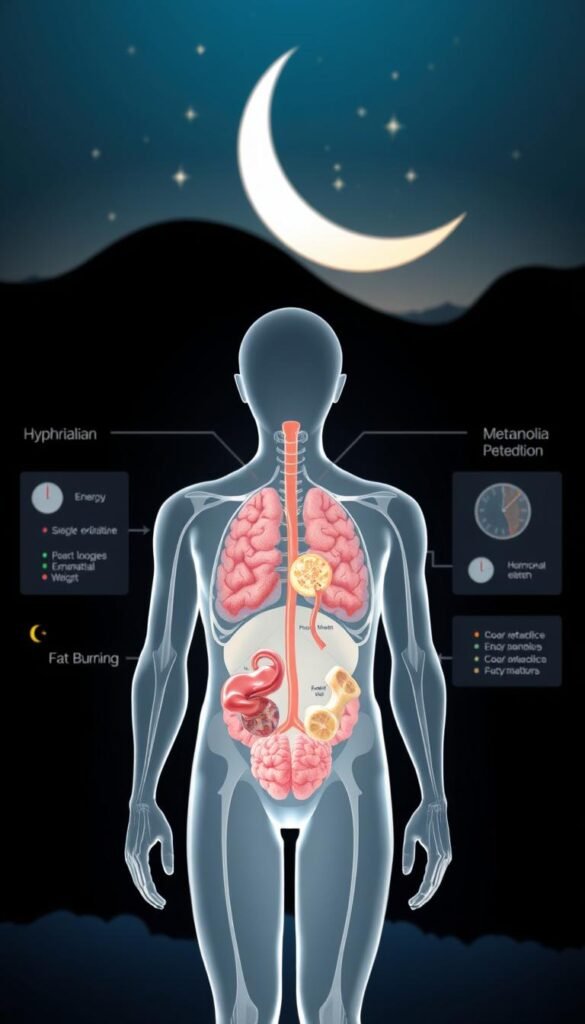
Your body burns calories differently at different times. Scientists call this thermogenesis. It’s the energy your body uses to digest food.
This metabolic activity peaks in the morning and decreases as the day goes on. Eating the same meal in the morning requires less effort than at night. Your nighttime metabolic function is weaker than during the day.
Studies show eating within an eight to 12-hour window is best. Eating outside this window messes with blood sugar and hormone production. This affects your weight and overall health.
Late-night eating often involves high-calorie foods like sweets and chips. This is because willpower drops and stress hormones rise. This combo leads to poor food choices.
How Evening Choices Impact Morning Results
What you eat at night affects the next day. A 2020 study found that eating dinner after 9 p.m. raises blood sugar the next morning. This is compared to those who ate by 6 p.m.
Higher blood sugar levels lead to more insulin production. This promotes fat storage. It also affects hunger, energy, and cravings all day.
The link between bedtime rituals for metabolism and morning results goes beyond meal timing. Sleep quality, stress, and evening activity also play a role. Poor choices in the evening can harm your weight management.
| Time of Day | Metabolic Rate | Thermogenesis Efficiency | Fat Storage Tendency |
|---|---|---|---|
| Morning (6-10 AM) | Highest | Peak efficiency | Lowest |
| Afternoon (12-4 PM) | Moderate-High | Good efficiency | Moderate |
| Evening (6-9 PM) | Moderate-Low | Reduced efficiency | Increased |
| Night (9 PM-12 AM) | Lowest | Minimal efficiency | Highest |
This table shows why timing matters as much as food choices for weight loss. The body’s metabolic rate changes throughout the day. This means the same meal can have different effects based on when you eat it.
The Circadian Rhythm Connection to Fat Storage
Your internal clock, or circadian rhythm, controls your body’s systems. It regulates hormone production, digestion, and metabolic rate. Aligning your habits with this rhythm helps manage weight.
The link between circadian rhythm and weight loss involves hormones. Cortisol peaks in the morning to wake you up and decreases as the day goes on. Melatonin, which helps you sleep, rises at night.
Disrupted circadian rhythms confuse your body. Late-night eating, bright screens, and irregular sleep schedules interfere with natural patterns. Your body stores more fat as a protective measure.
Sleep deprivation is harmful to your circadian rhythm. Lack of sleep changes hormones, leading to obesity. Ghrelin levels increase, making you hungrier. Leptin levels decrease, reducing the feeling of fullness.
Modern life challenges our natural rhythms. Artificial lighting and electronic devices disrupt our body’s natural patterns. Shift work, travel, and irregular schedules also disrupt our metabolic function.
Knowing these connections helps you make better evening choices. Simple changes to evening habits for fat burning can align your daily routines with your body’s natural preferences. This makes losing fat easier and more sustainable.
Setting Your Ideal Dinner Time for Optimal Fat Burning
Optimizing your evening eating schedule can boost your metabolism and help you lose weight. The time you eat affects how your body processes calories, even at night. Studies show that when you consume calories impacts how your body processes them during nighttime hours.
It’s not just about counting calories. Your body has natural rhythms for digestion, rest, and repair. Eating at the right time can help your body burn fat instead of storing it.
For weight control, plan your meals hours before bedtime. Your body digests food best during the day. Eating too close to bedtime can disrupt your body’s rest and repair processes.

Stopping Food Intake Three Hours Before Sleep
Eating your last meal three hours before bed is key for fat loss. This allows your body to digest food before sleep. Eating close to bedtime can disrupt sleep and slow down metabolism.
Your stomach needs 2-3 hours to empty after a meal. Eating too much before bed can cause acid reflux and poor sleep. Poor sleep quality can lead to weight gain by messing with hunger hormones.
When you don’t eat for a few hours, your body starts burning fat. Studies show that eating a late snack can reduce fat breakdown. This is because your body uses stored fat for energy instead.
A recent study found that eating a late-night snack broke down less fat than eating the same calories earlier in the day.
To follow this rule, plan your dinner around your sleep schedule. If you go to bed at 10 PM, eat dinner by 7 PM. This allows for gentle evening activities that aid digestion.
Advantages of Earlier Evening Meals
Eating dinner early has many benefits for weight loss. It helps you eat fewer calories because you’re more focused. Research shows that eating later in the evening leads to choosing more calorie-dense foods due to fatigue.
Early meals also improve blood sugar control. Your body processes carbs better between 5 PM and 7 PM. Eating at 9 PM can cause higher blood sugar spikes than at 6 PM.
Early dinners also improve sleep quality. Your body starts producing melatonin as it gets dark, signaling sleep. Digesting food can keep your body temperature and activity levels high, making it harder to fall asleep.
| Meal Timing | Fat Burning Capacity | Sleep Quality | Hunger Control Next Day |
|---|---|---|---|
| 5-6 PM Dinner | Optimal overnight fat metabolism | Deep, uninterrupted sleep | Balanced morning hunger signals |
| 7-8 PM Dinner | Good fat burning with 3-hour buffer | Good sleep with minimal disruption | Normal appetite regulation |
| 9-10 PM Dinner | Reduced overnight fat breakdown | Fragmented sleep patterns | Increased cravings and overeating |
| After 10 PM Eating | Minimal fat burning, increased storage | Poor sleep quality, frequent waking | Disrupted hunger hormones |
Aligning your meals with your body’s natural rhythms is key. Your body expects food at certain times based on its internal clock. Eating at the same times every day helps your body stay in sync.
Modified Schedules for Non-Traditional Hours
Night shift workers face unique challenges in meal planning. Traditional advice doesn’t apply when your “evening” is during the day. The key is to align your eating window with your personal sleep schedule, regardless of clock time.
If you sleep from 8 AM to 4 PM, treat your waking hours as “morning.” Eat your largest meal shortly after waking. Finish your last meal at least three hours before sleep, even if it’s at 5 AM.
Consistency is more important than specific times for shift workers. Your body adapts to regular patterns, whether you sleep during the day or night. Keep the same eating and sleeping schedule on work days and days off to avoid metabolic confusion.
Light exposure is critical for night shift workers. Use bright lights during active hours and complete darkness during sleep. This helps regulate your body’s internal clock and hormone release.
Scientific Evidence Supporting Time-Restricted Eating
Research on intermittent fasting shows that eating within a specific window is beneficial. Studies indicate that our bodies need to eat within an eight to 12-hour window for optimal metabolism. Eating outside this window can harm metabolism and blood sugar control.
The 16:8 intermittent fasting protocol, which involves eating during an eight-hour window and fasting for 16 hours, naturally fits optimal dinner timing. Most people finish their last meal by 6 PM or 7 PM and don’t eat again until 10 AM or 11 AM the next day.
This extended fasting period allows several beneficial processes to occur:
- Insulin levels drop significantly, facilitating fat breakdown
- Human growth hormone increases, supporting muscle preservation
- Cellular repair processes activate without digestive interference
- Ketone production begins, providing alternative fuel from fat stores
Research shows that restricting food intake to daylight hours leads to better weight loss. This is due to improved insulin sensitivity and enhanced fat oxidation during extended fasting periods.
Scheduling your meals strategically affects your body’s internal clock. Eating at certain times signals to your body what time of day it is, independent of light exposure. Consistent meal timing strengthens your body’s natural rhythms, regulating metabolism, hormone release, and cellular function.
Starting your eating window too early or extending it too late disrupts these natural rhythms. Most experts recommend starting your first meal no earlier than one hour after waking and finishing your last meal at least three hours before sleep. This respects both your body’s natural rhythms and digestive needs.
Night Routine For Weight Loss: Essential Components
Creating a good evening routine is key to losing weight. It’s about making a plan that fits your needs and works well. A good night routine helps you reach your weight loss goals.
Studies show that planning meals helps you lose more weight. This planning should cover your whole evening. It helps your body burn fat better.
Creating Your Personalized Evening Schedule
Your evening schedule should match your lifestyle and preferences. Start by figuring out when you get home and when you need to sleep. This time frame is where you build your evening habits.
Think about your natural energy levels. Are you an early riser or a night owl? A routine that fits your natural rhythm works best.
Start with a consistent dinner time, at least three hours before bed. Then, set aside time for exercise, relaxation, and getting ready for bed. The goal is to create a routine you can keep up, not one that feels like a chore.
The Five Pillars of an Effective Nighttime Routine
A good night routine has five key parts. These parts help your metabolism, improve sleep, and prepare you for the next day.
- Planned Nutrition: Eating dinner at the same time helps you avoid bad food choices. It also means planning meals for the next day.
- Strategic Movement: Light exercise helps with digestion and blood sugar. It tells your body it’s time to relax.
- Stress Management: Relaxing activities lower stress hormones that can make you gain weight. Try meditation or journaling.
- Sleep Preparation: Activities that calm you down help you sleep better. Dim lights and quiet spaces are key.
- Next-Day Planning: Getting ready for tomorrow reduces morning stress. It helps with your weight loss goals.
Regular eating and sleeping times improve sleep and help with weight loss. These five pillars help you create good habits. Together, they make your routine more effective.
Time-Blocking Your Evening for Success
Time-blocking turns good intentions into actions. It means setting specific times for each part of your evening routine. This avoids decision fatigue and ensures you do what’s important.
Your evening might be from 6:00 PM to 10:30 PM, depending on your schedule. Here’s how to use those hours well:
| Time Block | Activity | Duration | Weight Loss Benefit |
|---|---|---|---|
| 6:00-6:45 PM | Dinner preparation and eating | 45 minutes | Controlled portions, mindful eating |
| 6:45-7:30 PM | Post-dinner walk or light movement | 45 minutes | Blood sugar regulation, digestion support |
| 7:30-8:30 PM | Next-day meal prep and planning | 60 minutes | Prevents poor food choices tomorrow |
| 8:30-9:30 PM | Relaxation and stress reduction | 60 minutes | Lowers cortisol, reduces stress eating |
| 9:30-10:30 PM | Sleep preparation routine | 60 minutes | Optimizes sleep quality for metabolism |
Adjust these blocks to fit your schedule but keep the order. Going to bed at the same time every night is key. Aim for dinner and bedtime to be a few hours apart for better digestion.
Common Mistakes That Sabotage Results
Even with good intentions, people make mistakes that hurt their weight loss. Knowing these mistakes helps you avoid them and build a better routine.
Skipping meal planning is the biggest mistake. Without a plan, you’re more likely to eat unhealthy food. Spend 15 minutes each evening planning your meals.
Eating too much before bed messes with your sleep and metabolism. Your body needs time to digest before sleeping. That’s why the three-hour rule is so important.
Doing intense activities before bed raises stress hormones. This includes exercise, checking work emails, or having heated discussions. These habits can slow down your metabolism without you realizing it.
Irregular bedtimes confuse your body’s natural rhythm and can lead to weight gain. Your body likes routine. Changing your sleep schedule by more than 30 minutes messes with your hunger hormones.
Not preparing for tomorrow leads to morning stress and bad food choices. Rushing in the morning means grabbing unhealthy food. Building healthy habits includes planning for tomorrow.
The success of your evening routine is in its ability to shape tomorrow. Each part supports the others, creating momentum toward your goals. By consistently following these essential elements, you turn your nights into allies in your weight loss journey.
Evening Nutrition Strategies That Accelerate Weight Loss
The food you eat after dinner affects your body’s fat burning at night. Choosing the right foods for evening meals is key. This helps you lose weight by balancing satisfaction and metabolism.
Knowing what to eat in the evening can change your weight loss game. It’s about making choices that support your body’s natural rhythms. Your evening eating sets the stage for morning success.

Smart Snack Choices for Late Evening Hours
Not everyone can go from dinner to breakfast without getting hungry. If you need a snack, pick something healthy. Snacks should be under 200 calories and support sleep and metabolism.
Protein-rich snacks are best for before bed. Your body can use about 30-35 grams of protein at a time. This helps keep muscles strong and supports metabolism while you sleep.
Greek yogurt with berries is a great snack. It has protein, probiotics, and antioxidants. A small handful of almonds adds healthy fats and keeps blood sugar stable.
Turkey slices with cucumber are another good choice. They’re low in calories but high in protein. This snack keeps you full without feeling heavy.
Plant-based snacks work well too. Almond butter with apple slices is filling and has protein. Edamame and cottage cheese with cinnamon are also good options.
The following table outlines excellent pre-bedtime diet tips with calorie counts and protein content:
| Snack Option | Calories | Protein Content | Key Benefit |
|---|---|---|---|
| Greek Yogurt (6 oz) with Berries | 150-180 | 15-18g | Probiotics aid digestion |
| Almonds (1 oz/23 nuts) | 160 | 6g | Healthy fats stabilize blood sugar |
| Turkey Breast (3 oz) with Cucumber | 120 | 26g | Lean protein without heaviness |
| Cottage Cheese (1/2 cup) with Cinnamon | 90-110 | 14g | Casein protein digests slowly |
| Edamame (1 cup) | 189 | 17g | Complete plant-based protein |
Foods That Sabotage Nighttime Fat Burning
Some foods can mess with your metabolism at night. Knowing which ones to avoid is important. Desserts and sweets can lead to weight gain by raising blood sugar and insulin levels.
High-sugar treats like ice cream and cookies cause blood sugar spikes. This leads to cravings and makes it hard for your body to process carbs at night. The insulin surge promotes fat storage instead of burning.
Heavy, carbohydrate-dense meals also interfere with sleep. They require a lot of energy for digestion. This energy is better spent on detoxification and repair during sleep.
Processed snack foods are another problem. They’re high in calories but don’t keep you full. They often have sodium and unhealthy fats that cause water retention and inflammation.
The body doesn’t burn as many calories at night, so eating a heavy dinner, late, may hinder weight loss efforts and contribute to unwanted weight gain.
Alcohol is a big saboteur in the evening. It has a lot of calories and sugar and disrupts sleep. When you drink alcohol, your body focuses on breaking it down instead of burning fat.
Fried foods and fatty meats slow digestion a lot. They can cause discomfort and acid reflux. The fat content requires a lot of digestive work, which hurts sleep and metabolism.
Even healthy foods can be bad if eaten too late. Big servings of fruit can raise blood sugar. Raw vegetables can cause bloating and gas that disrupts sleep.
Strategic Evening Hydration
Drinking enough water is important for weight loss, but timing is key. You need to stay hydrated without waking up to use the bathroom. Finding the right balance is key to success.
Start cutting down on water about two hours before bed. Drink most of your evening fluids by 8 PM. This lets your body process liquids before you sleep.
Aim for 8-12 ounces of water with your evening meal. This amount helps with digestion without overwhelming you. If you get thirsty later, have small sips. Your kidneys need time to process fluids before sleep.
Herbal teas are great for evening hydration. Chamomile, peppermint, and ginger teas provide fluids and support digestion and relaxation. They’re caffeine-free, so they won’t disrupt your sleep.
Avoid these common hydration mistakes in the evening hours:
- Drinking large amounts of water right before bed
- Consuming caffeinated beverages after 2 PM
- Relying on sugary drinks or juice for hydration
- Using alcohol as a sleep aid or relaxation tool
- Ignoring thirst signals earlier in the day
Caffeinated drinks are a big no-no in the evening. Coffee, black tea, green tea, and many sodas can disrupt sleep. Even if you think you can sleep after drinking caffeine, it reduces deep sleep quality and REM cycles.
Check your urine color to see if you’re hydrated. Pale yellow means you’re good, while dark yellow means you need more water. Staying hydrated during the day means you won’t need as much water at night.
Some people find it helpful to have a small glass of water next to their bed. If you wake up, a few sips can soothe your throat without waking you up. This way, you can address nighttime thirst without breaking your sleep.
Temperature matters for evening beverages. Warm or room-temperature drinks digest better than cold ones. Cold drinks can shock your digestive system and cause discomfort when you’re trying to sleep.
Keep track of your evening fluid intake for a week. Notice how different amounts and timing affect your sleep and weight. This data will help you fine-tune your hydration strategy for better results. By following these tips, you can support natural fat burning while you sleep.
Light Evening Exercise Routines for Better Sleep and Slimming
Evening exercise doesn’t mean intense workouts. It’s about gentle movements that help you reach your goals. The right activities relax you and burn fat without keeping you awake.
People who do light workouts in the evening don’t have sleep problems. But, high-intensity activities like interval training can mess with your sleep. It’s important to pick calming activities that help you relax and burn calories.
Sitting too much can lead to obesity. People who sit a lot and then stare at screens at night might gain weight and have trouble sleeping. Adding movement after dinner helps break this pattern and supports weight loss.

Gentle Yoga Poses for Digestion and Relaxation
Some yoga poses calm your mind and help with digestion. These poses prepare your body for sleep and boost metabolism. You can do yoga in your bedroom without any special equipment.
Forward folds calm your nervous system. Sit up straight, then bend forward at the hips for five deep breaths. This helps reduce stress and improves sleep.
Seated twists help your digestive system. They gently massage your internal organs. Sit cross-legged, place your right hand on your left knee, and twist to the left.
The legs-up-the-wall pose reduces swelling and boosts circulation. It’s great if you’ve been on your feet all day. Lie on your back with your hips near a wall and extend your legs straight up.
Gentle hip openers release tension. These poses target areas where stress is stored. Try a butterfly pose by sitting with your feet together and gently pressing your knees toward the floor.
Post-Dinner Walking for Blood Sugar Control
A 15-30 minute walk after dinner is very beneficial. It helps control blood sugar and burn calories. This is a simple and effective way to exercise in the evening.
Walking after eating improves digestion. It stimulates your digestive system without requiring hard effort. This helps your body process food efficiently.
Evening walks burn calories without disrupting sleep. Unlike intense exercise, moderate walking helps you relax and lowers your body temperature. It’s perfect for transitioning from dinner to bedtime.
Making post-dinner walking a consistent habit is easier with these tips:
- Schedule your walk right after dinner to make it a routine
- Invite family or friends to join you for fun and accountability
- Use indoor alternatives like mall walking or treadmills when it’s rainy
- Start with 10 minutes and increase as you get into the habit
- Listen to podcasts or audiobooks to make it enjoyable
This habit replaces screen time with beneficial movement. Many find their evening walk a cherished part of their routine, providing mental clarity and physical benefits.
Stretching Sequences to Reduce Cortisol Levels
High evening cortisol can hurt sleep and fat burning. Simple stretches targeting major muscle groups can lower stress hormones. A 10-15 minute sequence in comfy clothes offers significant metabolic benefits.
Start with neck rolls to release upper body tension. Slowly rotate your head in circles, breathing deeply. This signals your body to start winding down.
Next, do shoulder stretches by clasping your hands behind your back and lifting your arms. This opens your chest and counteracts forward posture. Hold each stretch for 20-30 seconds without bouncing.
Cat-cow stretches on hands and knees mobilize your spine and relax you. Alternate between arching and rounding your back, matching the movement with your breath. This sequence reduces physical and mental tension.
Hamstring stretches in a seated or standing position release lower body tightness. Tight muscles can make it hard to sleep. Stretching should feel pleasant, not painful.
Finish with a child’s pose, resting on your knees with your forehead on the ground and arms extended. This pose allows your body to integrate the routine’s benefits while lowering cortisol levels.
When to Stop Intense Workouts Before Bed
High-intensity activities like interval training or heavy strength training too close to bedtime can ruin your sleep. These activities raise your body temperature and cortisol levels, making it hard to fall asleep. Stop intense workouts at least an hour before bed to recover properly.
Strength training burns calories even after you’re done. But, it only works if you can sleep well afterward. Doing intense workouts earlier in the day maximizes their benefits without affecting your sleep.
When choosing evening workouts, avoid running or weight lifting after 7 PM. Opt for calming activities like walking, stretching, and yoga instead. This timing lets your body temperature and heart rate return to normal before sleep.
| Exercise Type | Latest Recommended Time | Impact on Sleep | Weight Loss Benefit |
|---|---|---|---|
| High-Intensity Interval Training | At least 3 hours before bed | Significantly disrupts sleep if too late | Excellent for fat burning when timed correctly |
| Heavy Strength Training | At least 2-3 hours before bed | Elevates cortisol and body temperature | Continues burning calories overnight with proper timing |
| Moderate Walking | Can be done 30 minutes before bed | Actually improves sleep quality | Steady calorie burn without sleep disruption |
| Gentle Yoga and Stretching | Can be done right before bed | Actively promotes better sleep | Supports metabolism through stress reduction |
The difference between good evening activity and bad is clear. Moderate activities lower stress and prepare you for sleep. Intense workouts keep you awake and alert.
Listen to your body’s signals. If you feel too energized after evening exercise, you’ve likely done too much or too late. The best feeling is pleasantly tired and relaxed, not overstimulated.
Choosing the right evening activities and respecting timing helps you sleep well and manage weight. This approach makes your evening routine support your goals, not hinder them.
Optimizing Sleep Quality to Boost Metabolism
Restful sleep is key to managing weight. Your body does important work while you sleep, like burning fat. Learning to make the most of your sleep can help you lose weight.
Creating a sleep-friendly environment can turn your bedroom into a fat-burning zone. Good sleep affects hormones, hunger, and energy use. These factors help or hurt your weight loss goals.
Understanding the Sleep-Weight Loss Connection
Not getting enough sleep makes you hungrier. Lack of sleep changes hormones, leading to weight gain. This happens automatically, no matter how healthy you eat.
Two hormones, ghrelin and leptin, play a big role. Too little sleep raises ghrelin levels, making you hungry. At the same time, it lowers leptin, which makes you feel full.
Adults need 7.5 to 9 hours of sleep for good metabolism. Less sleep messes with appetite and nutrient processing. People who don’t sleep well are more likely to gain weight.
Bad sleep also affects your brain. It makes you make poor food choices. This can lead to eating more calories, mostly from unhealthy foods.
Creating the Perfect Sleep Environment
Your bedroom’s setup is vital for better sleep. Keeping it cool is key. Studies show that a 65-66 degree room boosts brown fat, which burns calories.

One study found that keeping the room at 66 degrees increased calorie-burning brown fat by up to 42%. This boosted metabolism by 10%, helping with fat burning.
Darkness is also important. Your body makes melatonin in the dark. This hormone helps your metabolism and energy storage. Even a little light can mess with this process.
Here are some tips for a better sleep environment:
- Install blackout curtains to block out light
- Remove electronic devices that light up
- Use a sleep mask if it’s too bright
- Use white noise machines or earplugs for quiet
- Choose breathable bedding for the right temperature
A room that’s too warm can disrupt sleep. Light exposure also messes with rest and metabolism.
Managing Blue Light Exposure After Sunset
Electronic screens give off blue light, like daylight. This light stops melatonin production, making you stay awake. This messes with your metabolism and weight.
Devices like TVs, phones, and computers all have blue light. Using them at night tricks your body into thinking it’s daytime. This delays sleep and metabolism recovery.
Experts say to stop screens 30 to 60 minutes before bed. This lets melatonin levels rise and helps you sleep better. You’ll notice the difference in a few nights.
If you can’t avoid screens, try these tips:
- Use blue light filtering apps
- Wear blue light blocking glasses
- Lower screen brightness
- Keep screens away from your face
Replace screens with relaxing activities. Reading, stretching, or listening to music are good choices. These activities help you wind down and prepare for sleep.
Sleep Duration Targets for Optimal Results
Getting 7.5 to 9 hours of sleep needs planning. Know your wake-up time and work backward to find your bedtime.
For example, if you wake at 6:00 AM and want eight hours, go to bed by 9:30 PM. Start by going to bed 15 minutes earlier every three to four days. This helps your body adjust without feeling forced.
Consistency is key. Sleep at the same time every night, even on weekends. This strengthens your circadian rhythm, improving sleep and metabolism. This cycle helps with weight loss.
Track how you feel in the morning. Good sleep should make you feel refreshed and alert. If you wake up feeling great, you’ve found the right sleep time.
Stress-Reduction Techniques Before Bed
Your evening stress levels could be the missing piece in your weight loss puzzle. They silently interfere with metabolism and trigger unhealthy eating patterns. When you carry tension from the day into your nighttime hours, your body releases cortisol and other stress hormones. These relaxation techniques before bed calm your mind and support your weight management goals.
Chronic stress leads to weight gain, mainly around the midsection. Many people turn to food as a coping mechanism when they feel anxious or overwhelmed in the evening. By implementing targeted stress-reduction practices, you create a buffer between daily pressures and your sleep period. This sets the stage for better rest and more effective fat burning overnight.

Taking just 15-20 minutes before bed to actively reduce stress can transform your nighttime weight management results. The techniques below require minimal equipment and can be adapted to fit any schedule or lifestyle. They work by lowering cortisol levels, reducing emotional eating triggers, and preparing your body for restorative sleep.
Meditation Practices for Cortisol Management
Meditation offers one of the most powerful tools for cortisol control for weight loss, when practiced in the evening hours. Elevated cortisol at night signals your body to store fat. Regular meditation practice can reduce cortisol levels by up to 20% according to recent studies.
You don’t need hours of practice to see benefits. Starting with just 5-10 minutes of focused meditation can produce measurable stress reduction. The key is consistency, not duration.
Body scan meditation works exceptionally well for evening practice. This technique involves mentally scanning from your toes to your head, releasing tension in each body part as you go. Lie comfortably on your bed and slowly bring awareness to each muscle group, consciously relaxing areas where you hold stress.
Mindfulness meditation focuses on breath awareness to calm mental chatter. Sit in a comfortable position and direct your attention to the natural rhythm of your breathing. When thoughts arise about work deadlines, family concerns, or food cravings, acknowledge them without judgment and gently return focus to your breath.
Loving-kindness meditation shifts your mental state from stressful thought patterns to more positive emotions. This practice involves silently repeating phrases like “May I be healthy, may I be peaceful” while extending compassion to yourself and others. This type of meditation helps those who struggle with negative self-talk about their weight or eating habits.
Meditation is not about stopping thoughts, but recognizing that we are more than our thoughts and our feelings.
The beauty of evening stress reduction through meditation lies in its accessibility. You need no special equipment or training to begin. Many people find guided meditation apps helpful when starting out, as they provide structure and prevent the mind from wandering.
Journaling to Process Daily Stress and Food Choices
Evening journaling serves as a powerful dual-purpose tool for weight management. It helps process emotional stress that might keep you awake or drive you to the kitchen for comfort food. Simultaneously, it increases awareness of your eating patterns and food choices throughout the day.
Writing down your thoughts before bed prevents rumination—that endless mental replay of stressful events that interferes with sleep quality. When worries stay trapped in your head, they feel overwhelming. Transferring them to paper makes them manageable and less emotionally charged.
For cortisol control for weight loss, reflection journaling proves effective. Spend 10-15 minutes reviewing your day without harsh self-criticism. Write about what went well, what challenges you faced, and how you responded to stress or cravings.
Consider these journaling prompts for evening practice:
- What were my three healthiest food choices today, and what made them possible?
- When did I feel most tempted to eat emotionally, and what was I really feeling?
- What am I grateful for about my body and health today?
- What’s one small improvement I can make tomorrow?
- How did stress affect my eating patterns today?
The act of writing engages different brain regions than thinking alone. This engagement creates distance from intense emotions and helps you recognize patterns in your behavior. You might notice that you consistently overeat after stressful work meetings or that skipping lunch leads to evening binges.
Journaling also provides a constructive alternative evening activity. Instead of mindlessly snacking out of boredom, you’re actively working toward your goals. This nighttime weight management strategy replaces unhealthy habits with beneficial ones.
Keep your journal and pen on your nightstand as a visual reminder. The ritual of opening your journal can become a signal to your brain that the day is ending and it’s time to transition into rest mode.
Breathing Exercises for Deep Relaxation
Controlled breathing exercises activate your parasympathetic nervous system—the body’s built-in relaxation response. These techniques work faster than meditation for immediate stress relief and require absolutely no equipment. You can practice them anywhere, making them ideal relaxation techniques before bed.
The physiological effects are measurable and immediate. Deep breathing slows your heart rate, lowers blood pressure, and reduces cortisol production. These changes signal your body to shift from “fight or flight” mode into “rest and digest” mode, which supports healthy digestion and fat metabolism.
The 4-7-8 breathing technique produces rapid calming effects. Here’s how to practice it:
- Exhale completely through your mouth, making a whoosh sound
- Close your mouth and inhale quietly through your nose for 4 counts
- Hold your breath for 7 counts
- Exhale completely through your mouth for 8 counts
- Repeat this cycle 3-4 times
This pattern works because the extended exhale activates relaxation responses in your nervous system. Many people report feeling noticeably calmer after just one cycle. Regular practice enhances the effect over time.
Box breathing offers balanced nervous system regulation. Visualize tracing a square while you breathe: inhale for 4 counts, hold for 4, exhale for 4, hold for 4. This technique helps when you feel anxious or when racing thoughts prevent sleep.
Extended exhale breathing triggers relaxation responses. Simply make your exhales longer than your inhales—breathe in for 3 counts and out for 6 counts. This ratio shifts your body chemistry away from stress and toward calm.
| Breathing Technique | Best For | Duration | Key Benefit |
|---|---|---|---|
| 4-7-8 Breathing | Rapid stress relief | 2-3 minutes | Quick cortisol reduction |
| Box Breathing | Anxiety management | 5 minutes | Balanced nervous system |
| Extended Exhale | Sleep preparation | 5-10 minutes | Deep relaxation state |
| Diaphragmatic Breathing | Chronic stress | 10 minutes | Improved oxygen flow |
Practice these breathing exercises while lying in bed with the lights dimmed. This creates a strong association between the practice and sleep, strengthening your bedtime routine. Over time, simply beginning the breathing pattern will signal your body that it’s time to wind down.
The combination of stress-reduction techniques creates a powerful foundation for evening stress reduction and weight management success. Unlike diet pills or extreme exercise routines, these practices address root causes. They reduce the cortisol that promotes fat storage, eliminate emotional eating triggers, and improve sleep quality—all factors that directly influence your ability to lose weight.
Start with whichever technique resonates most with you. Some people prefer the active engagement of journaling, while others find breathing exercises more accessible. You might rotate between methods depending on your needs each evening. The important thing is establishing a consistent practice that fits naturally into your routine.
Remember that stress management isn’t a luxury—it’s a fundamental component of effective weight loss. When you address evening stress, you’re not just feeling better emotionally. You’re creating the physiological conditions that allow your body to burn fat efficiently, make better food choices, and sleep deeply enough to support metabolic health.
Digital Detox and Screen Time Management
Many people use devices before bed, not knowing they harm their metabolism and hunger hormones. Phones, tablets, and laptops seem harmless as you scroll or watch shows. But research shows these habits block weight loss through many ways.
Screen time and weight gain are linked in ways beyond just sitting too much. Devices mess with your body’s sleep and recovery prep. Knowing this helps you choose better evening activities and healthy pre-sleep practices.
The Hidden Ways Screens Undermine Your Progress
Electronics harm your weight loss efforts in three main ways. The first is blue light from screens messing with your sleep and melatonin.
Blue light in the evening tricks your brain into thinking it’s daytime. This stops melatonin production, leading to poor sleep. Poor sleep makes you hungrier and eat more the next day.
A Northwestern University study found blue light at night increases hunger and insulin resistance. This leads to weight gain and less fat burning.
The second way is direct metabolic disruption. Blue light at night makes your body less good at handling carbs. This problem stays even after you turn off your device.

The third way is distracted eating. Eating while watching TV or scrolling on phones makes you eat more. You don’t feel full as well.
High screen time is linked to more obesity in all ages. Kids and teens with too much screen time gain more weight. Adults with evening screen habits also face weight gain.
Screen time and weight gain are big problems, worse for those who sit a lot at work. Evening screens add to the problem, making it hard to maintain a healthy weight.
Building Your Tech-Free Evening Window
Creating an evening digital detox needs planning and setting device limits. Start with turning devices off 60 minutes before bed. If 60 minutes is hard, start with 30 and increase it.
Put all devices in a charging station outside your bedroom. This stops the urge to check phones or scroll before bed. It also helps avoid using your phone as an alarm.
Use a traditional alarm clock instead of your phone. This keeps devices away from your bed. Alarm clocks cost less than $15 and keep you from screens at night.
Tell your family and friends about your new rules. Most people get it when you say it helps your health. Tell them you’ll answer messages in the morning.
Work contacts might need special handling. If you’re on-call, pick people to reach you through other ways. Most jobs don’t need you at night.
Rewarding Activities That Replace Screen Time
Success in digital detox comes from finding fun, non-screen activities. Reading books or magazines is great. Keep a book by your bed to make it easy.
Talking with family can be more fun than screens. Discussing the day or plans creates connection without screen downsides. These talks often feel more rewarding than watching TV.
Try hobbies that keep your hands busy and your mind relaxed:
- Knitting or crocheting – Calms your mind and makes useful items
- Adult coloring books – Artistic fun without needing skills
- Puzzles or brain games – Mental challenge through physical activity
- Playing musical instruments – Creative outlet that demands focus
- Writing or journaling – Process thoughts and emotions before sleep
Listening to podcasts or audiobooks is a good alternative to screens. It’s great for those who can’t handle silence. Choose calming content to help you sleep.
Getting ready for the next day makes evening productive. Lay out clothes, pack lunch, or organize your workspace. These activities help reduce morning stress.
Gentle stretching or yoga before bed helps your body relax. These activities support your metabolism and reduce stress without disrupting sleep.
Taking relaxing baths helps your weight loss efforts. The warm water signals your brain it’s time to sleep. Adding Epsom salts gives you magnesium for better metabolism and muscle recovery.
The secret to keeping your technology-free bedtime routine is finding activities you enjoy. Try different things until you find what works for you. Enjoying your routine makes it easier to stick to it for the long term.
Supplement and Herbal Support for Nighttime Weight Management
Natural sleep aids for metabolism are a great addition to your weight loss plan at night. Eating right, exercising, and sleeping well are key. But, the right evening supplements can help even more. They work with your body, not against it.
Understanding how certain nutrients and herbs affect sleep and metabolism is key. Many people lack important minerals that help with weight loss and sleep. Taking supplements can help your body burn fat while you sleep.
Supplements should always complement, not substitute your core evening routine practices. When combined with proper meal timing, stress management, and good sleep hygiene, bedtime supplements can provide that extra edge many people need to break through weight loss plateaus.
Magnesium for Better Sleep and Metabolic Function
Magnesium is a top mineral for weight management at night. It helps with over 300 body functions, including blood sugar and energy production. Sadly, nearly half of Americans don’t get enough.
Magnesium helps you sleep better by relaxing your body. This leads to better hunger hormone control and less cravings the next day. It also supports insulin sensitivity and reduces muscle cramps at night.
Magnesium glycinate and magnesium citrate are the best forms for evening use. Glycinate is absorbed well and doesn’t upset your stomach. Citrate helps with bowel movements. Most adults need 200-400 mg before bed, but it depends on your diet and weight.
Herbal Teas That Aid Digestion and Fat Burning
Herbal teas in your evening routine offer many benefits. They help you relax and support digestion and metabolism. These teas make a soothing ritual that signals your body to wind down.

Chamomile tea has been used for centuries to relax and improve sleep. It has a mild sedative effect and supports digestion. This helps reduce bloating and discomfort after dinner.
Peppermint tea is great for digestion after dinner. Its menthol relaxes your digestive tract, easing gas and bloating. This makes you feel more comfortable as you sleep and prevents digestive issues.
Ginger tea boosts your metabolism and supports digestion. It reduces inflammation and stabilizes blood sugar. Its warming effect is a nice alternative to evening snacking.
Green tea is also beneficial, but it should be drunk earlier due to caffeine. Its catechins, like EGCG, boost metabolism. Enjoy it 3-4 hours before bed to avoid sleep disruption.
The ritual of preparing and slowly sipping warm tea has psychological benefits. It helps you relax, reduces stress, and is a healthy alternative to mindless eating.
The Role of Melatonin in Weight Control
Melatonin is your body’s sleep-wake cycle regulator. New research shows it also affects metabolism. It’s produced in response to darkness, signaling sleep time. But, modern life often disrupts this.
Melatonin may influence weight management in several ways. It affects fat cell differentiation and insulin sensitivity. It also helps regulate glucose metabolism.
The biggest benefit of melatonin is better sleep quality. This leads to normalized hunger hormones, better appetite control, and reduced calorie intake the next day.
Use melatonin in low doses of 0.5-3 mg, 30-60 minutes before bed. Start with the lowest effective dose for better results. It works best with consistent sleep schedules and good sleep hygiene.
Safety Considerations and Proper Dosage Guidelines
While bedtime supplements offer benefits, using them responsibly is key. Natural doesn’t mean safe for everyone. People respond differently to supplements based on their health, medications, and biochemistry.
Consulting with a healthcare provider before starting any supplement is essential. This is true for those on medications, with health conditions, pregnant or nursing, and under 18. Supplements can interact with medications, affect lab tests, or worsen health conditions.
The following table provides general guidance for common evening supplements for weight loss, but these recommendations should not replace personalized medical advice:
| Supplement | Typical Dosage Range | Optimal Timing | Potential Interactions | Common Side Effects |
|---|---|---|---|---|
| Magnesium Glycinate | 200-400 mg | 30-60 minutes before bed | May affect antibiotic absorption; consult doctor if taking heart medications | Digestive upset at high doses; generally well-tolerated |
| Melatonin | 0.5-3 mg | 30-60 minutes before bed | May interact with blood thinners, diabetes medications, immunosuppressants | Next-day drowsiness, vivid dreams, temporary mood changes |
| Chamomile Tea | 1-2 cups (240-480 ml) | 1-2 hours before bed | Possible interaction with blood thinners; allergic reactions in those sensitive to ragweed | Rare allergic reactions; generally very safe |
| L-Theanine | 100-200 mg | 30-60 minutes before bed | May enhance effects of blood pressure medications | Mild headache, dizziness in sensitive individuals |
Quality is important when choosing supplements. Look for third-party tested products by NSF International, USP, or ConsumerLab. These certifications ensure purity and potency.
Start with one supplement at a time. This lets you see how it works and if you have any side effects. Give each supplement at least two weeks before judging its effects on sleep and weight.
Remember that supplements work best as part of a complete approach to evening weight management. They can’t replace good eating, exercise, and sleep. View them as tools to enhance your healthy habits.
Tracking Progress and Adjusting Your Evening Routine
Knowing what really matters can change how you track weight loss. Your evening routine should grow based on real data, not guesses. This means watching many health signs and making smart changes over time.
People who plan and track their meals do better with weight. Studies show they face less risk of type 2 diabetes and obesity. Writing down meals helps keep you on track with your evening goals.
Success comes from measuring progress well and tweaking your routine as needed. This section offers practical ways to check your evening routine and make smart changes.
Comprehensive Health Indicators Worth Monitoring
The scale only tells part of your story. Non-scale victories often show progress before weight changes. Tracking different signs gives a full view of how your evening habits affect your health.
Sleep quality is a key sign of routine success. Use apps or a journal to track how well you sleep each morning. Better sleep means your evening habits are working with your body’s natural rhythms.
Energy levels during the day show how well you slept. Pay attention to how alert you feel in the morning. If you have lots of energy, your evening routine is helping your body.
Watch these non-scale victories for a full picture:
- Take waist measurements weekly at the same time
- Notice how your clothes fit, mainly around the waist
- Track hunger and cravings, like morning appetite
- See how stressed you feel in the evening and if you can relax
- Check if you stick to your routine every week
- Notice your mood and overall happiness
These signs often show improvement before weight changes. They keep you motivated during times when the scale doesn’t move.
| Metric Category | What to Track | Frequency | Success Indicators |
|---|---|---|---|
| Sleep Quality | Hours slept, wake frequency, morning energy | Daily | 7-9 hours, minimal waking, high energy |
| Body Measurements | Waist circumference, clothing fit | Weekly | Decreasing measurements, looser clothes |
| Appetite Control | Evening cravings, morning hunger levels | Daily | Reduced cravings, balanced hunger |
| Stress Management | Ability to wind down, evening mood | Daily | Easier relaxation, improved mood |
Structured Weekly Review Process
Regularly checking your routine keeps it on track. Set aside 10-15 minutes each week to review the past seven days. This keeps you accountable and finds areas for improvement.
Start by noting what you did well. Celebrate your successes, like walking after dinner or avoiding screens before bed. Recognizing your achievements helps keep you on the right path.
Look for patterns in your data during weekly reviews. You might find better sleep after yoga or less hunger after eating earlier. These insights help you make better choices.
Don’t be too hard on yourself when you face challenges. Maybe weekends or work stress got in the way. Understanding these obstacles helps you find solutions, not give up.
Use this weekly assessment framework for ongoing improvement:
- Calculate your routine consistency percentage for the week
- Review all tracked metrics and note trends or changes
- Identify your biggest success and the factor that enabled it
- Recognize one challenge and brainstorm possible solutions
- Select one or two specific adjustments to test next week
This structured approach turns vague goals into concrete steps. Regular reviews create a feedback loop that speeds up your progress toward weight management goals.
Strategic Modification Guidelines
Knowing when to adjust your bedtime habits is key to success. Several signs show it’s time for a change, not a complete overhaul.
Weight loss plateaus for weeks despite sticking to your routine mean it’s time to tweak. Your body adapts to patterns, sometimes needing new stimuli to keep improving. This is normal, not a sign of failure.
If your routine feels too hard or restrictive, it’s time to make changes. Sustainable habits lead to better long-term results than perfect routines you can’t keep up with. Adjust parts that cause too much stress or trouble.
Poor sleep quality means your routine isn’t right for you. Some people need different timing, activities, or settings than general advice suggests.
When adjusting your bedtime habits, do it wisely:
- Change one thing at a time to see what works
- Wait one to two weeks to see if it’s effective
- Make small changes, not big ones
- Keep track of what you changed and the results
Try adjusting dinner times by 30 minutes. Experiment with different activities before bed if they don’t help you relax. Try different herbal teas or change when you take supplements under a doctor’s advice.
Remember, routines should adapt as life changes. Seasonal shifts, work schedule changes, and life events all require flexibility. Aim for consistent, beneficial habits that fit your current situation, not rigid perfection.
By combining structured tracking with smart adjustments, you create a flexible system. This approach values both consistency and flexibility, leading to lasting results.
Building Consistency and Long-Term Success
Getting into a night routine that feels natural is key to lasting weight loss. It’s about creating habits that stick through all life’s seasons. Moving from strict diets to flexible routines is essential for consistency.
Studies show that cooking your meals regularly can lower the risk of diabetes and obesity. Regular routines can also improve sleep quality, helping with weight loss. Your evening habits play a big role in your overall health, not just your weight.
Creating Routines That Last a Lifetime
Good routines are different from short-term diets. They focus on progress, not perfection, and get easier with time. The goal is to find habits that offer the most benefits with the least effort.
Here’s what makes routines sustainable:
- Flexibility over rigidity: Your routine adapts to different situations, not the same every night
- Personal alignment: Your habits match your preferences and lifestyle, not someone else’s
- Gradual improvement: You build momentum with small wins, not overnight changes
- Occasional deviations: Missing a night doesn’t ruin your progress or lead to an all-or-nothing mindset
- Intrinsic motivation: You enjoy the habits themselves, not just for weight loss
Good sleep is key for health and weight management. Focus on evening habits that improve your sleep. These habits should be kept consistent, even when other parts of your routine change.
Navigating Social Events and Travel
Life includes dinner parties, vacations, and celebrations that test your routines. The key is to adapt your habits to these situations, not to avoid them.
When dining out with friends, try to get reservations early. Choose lighter options and keep up your post-dinner walk habit, even if it’s just for 15 minutes.
Travel can be challenging but also offers chances to stay consistent. Look for places to stay with kitchen access to cook some meals. Bring your favorite evening tools, like resistance bands or herbal tea, to keep up your routines.
Try to keep the same sleep schedule when traveling to support your body’s rhythm.
The secret of change is to focus all of your energy not on fighting the old, but on building the new.
Plan ahead for holidays and special events. Keep your sleep schedule consistent, even when you’re eating more. This way, you honor your goals and enjoy your social life.
Integrating Evening Habits with Comprehensive Lifestyle Approaches
Evening routines work best when they’re part of a broader healthy lifestyle. Your night habits build on the foundation of your morning, day, and stress management.
Building healthy habits for weight loss requires a holistic approach. Meal planning and a consistent bedtime routine are powerful strategies. Preparing meals for the next day in your evening routine helps you make better choices tomorrow.
A lifestyle change for weight management goes beyond any single habit or time. For more on natural weight loss and lifestyle changes, check out my blog at www.healthyliferevolutions.com/blog. These resources offer daytime strategies to complement your evening habits for better results.
Maintaining Motivation When Progress Stalls
Weight loss doesn’t always go down in a straight line. Plateaus are normal as your body adjusts. How you respond to these stalls is more important than the plateaus themselves.
When the scale stops moving, focus on other health markers. Notice improvements in sleep, energy, mood, or how your clothes fit. These signs of health often keep improving even when weight loss stalls.
Remember, consistency means keeping up good habits through plateaus, not giving up. Use your weekly check-ins to find small tweaks that can help you move forward again. Sometimes, just a tiny change in dinner timing or exercise can make a big difference.
Connect with supportive groups or accountability partners who get it. Sharing challenges and celebrating small wins helps keep you motivated. Remember why you started this journey when frustration hits.
Here are some strategies for breaking through a plateau:
- Review your food journal for patterns you might have missed
- Slightly adjust your evening meal timing or composition
- Increase the intensity or duration of your post-dinner walk
- Evaluate whether stress levels have increased and need additional management
- Ensure you’re meeting your sleep duration targets consistently
The plateau phase tests your commitment to lifelong health, not just quick fixes. Those who keep up their routines through tough times achieve lasting change. Your sustainable habits are the foundation for maintaining your goal weight for years.
Conclusion
Your journey to lasting weight loss goes beyond just breakfast and lunch. The evening hours hold great power for your goals. The strategies shared here work with your body’s natural flow.
Meal timing, nutrition, light exercise, stress reduction, quality sleep, and digital detox are key. They all connect and support each other. Better sleep leads to better food choices tomorrow. Lower stress helps you sleep deeper.
Start with small, easy changes. Building healthy habits takes time. Begin with a set dinner time or a simple bedtime routine. Add more habits as they become part of your evening.
Regular routines boost sleep and help with weight loss. Quality sleep is vital for health and losing weight. Your evenings can now be your secret to success. The knowledge you’ve gained offers practical tools for each night.
Small, strategic changes in your evening can lead to big results. Your dedication to these habits will help you reach your goals steadily.