Could a single week of simple meals reset your habits and jump-start real weight loss without breaking the bank?
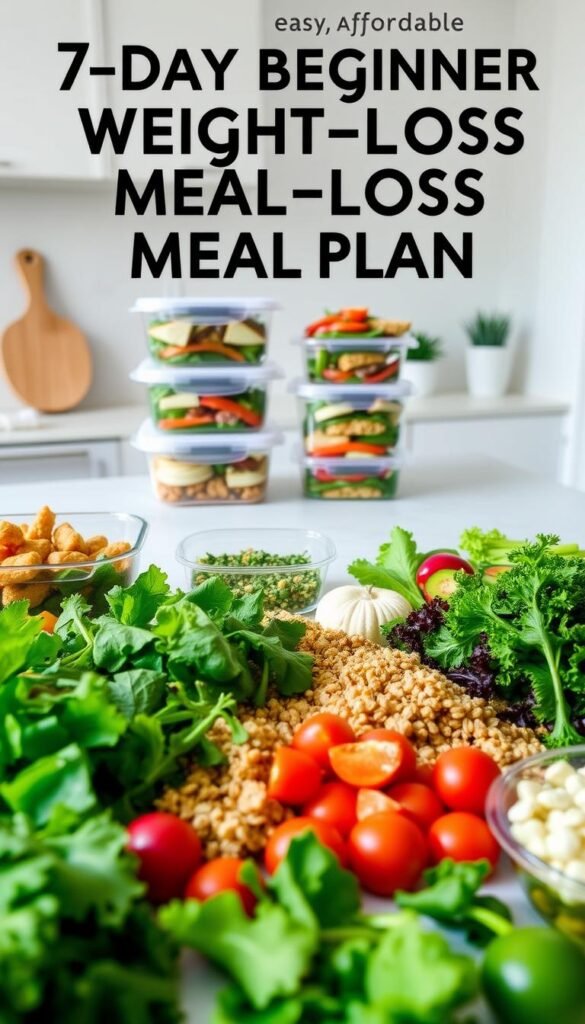
This 7-day beginner weight-loss meal plan is for those who want clear, practical steps. It includes portioned breakfasts like bran flakes with banana, lunches such as turkey pita with fruit, and dinners like steamed shrimp with baked potato and spinach. It blends evidence-based calorie targets and nutrient-dense choices so you can eat filling food while cutting calories.
Alongside menus, you’ll get an easy, affordable grocery list and family-friendly meals that scale for kids or partners. The plan highlights whole grains, lean proteins, legumes, frozen produce, and low-fat dairy to keep costs down and nutrition high.
Key Takeaways
- This plan gives daily, portioned menus to simplify choices for beginners.
- Menus combine affordable staples like oats, lentils, canned tuna, and frozen vegetables.
- Easy, affordable grocery list and family-friendly meals make meal prep scalable.
- Targets realistic calories and balanced macronutrients for sustainable results.
- Swaps and simple recipes support dietary needs and budget limits.
Why a 7-Day Beginner Weight-Loss Meal Plan Works for Beginners
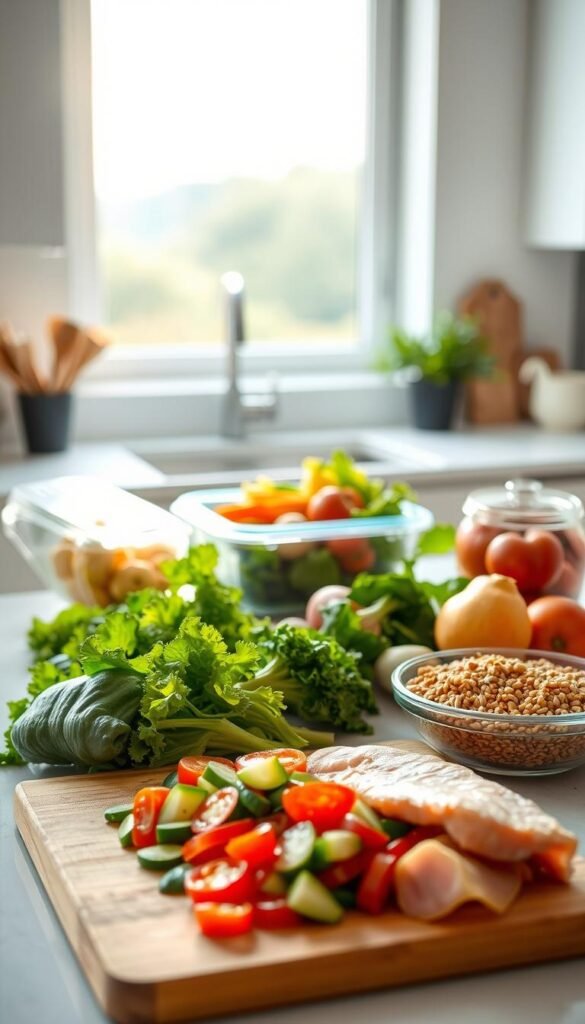
A clear weekly plan removes guesswork and cuts decision fatigue for people starting a new routine. A 7-day beginner weight-loss meal plan gives a repeatable pattern for breakfast, lunch, dinner, and snacks. This simple structure helps build habits one meal at a time.
Simple structure to build habits
Start with familiar foods and fixed portions to make change feel doable. Morning routines might include oats, Greek yogurt, or a whole-grain cereal that match guidance of many evidence-based plans. Short grocery lists and repeatable dinners reduce cooking time and make healthy meal planning for beginners realistic.
Balanced nutrition based on lean protein, whole grains, fruits and vegetables
The best simple weight loss meal plan centers on lean protein like chicken, canned tuna, or shrimp, paired with whole grains and plenty of vegetables. These plates meet dietary guidelines while keeping meals satisfying. Fruit for snacks or dessert keeps sweetness controlled without excess calories.
Realistic calories and portion guidance drawn from low-budget, evidence-based plans
Practical examples often use 3–4 ounce protein servings, one cup cooked whole grains, and two cups of vegetables per day segment. A budget-friendly 7-day low-calorie example near 1,200 kcal shows how nutrient-dense choices such as oatmeal, lentil soup, and tofu stir-fry can fit both wallet and goals.
| Plan Element | Practical Example | Why it helps |
|---|---|---|
| Breakfast | Oatmeal with banana or Greek yogurt with berries | Provides fiber, steady energy, and a simple start to healthy meal planning for beginners |
| Lunch | Turkey sandwich on whole-grain bread or lentil soup | Portable, affordable, and supports balanced macronutrients for a simple weight loss meal plan |
| Dinner | Grilled chicken or salmon with brown rice and steamed vegetables | Lean protein plus whole grain stabilizes hunger and aids weight control in a 7-day beginner weight-loss meal plan |
| Snacks | Apple with peanut butter or a small handful of almonds | Helps manage hunger between meals and prevents overeating at main meals |
7-Day Beginner Weight-Loss Meal Plan Easy, affordable grocery list Family-frie
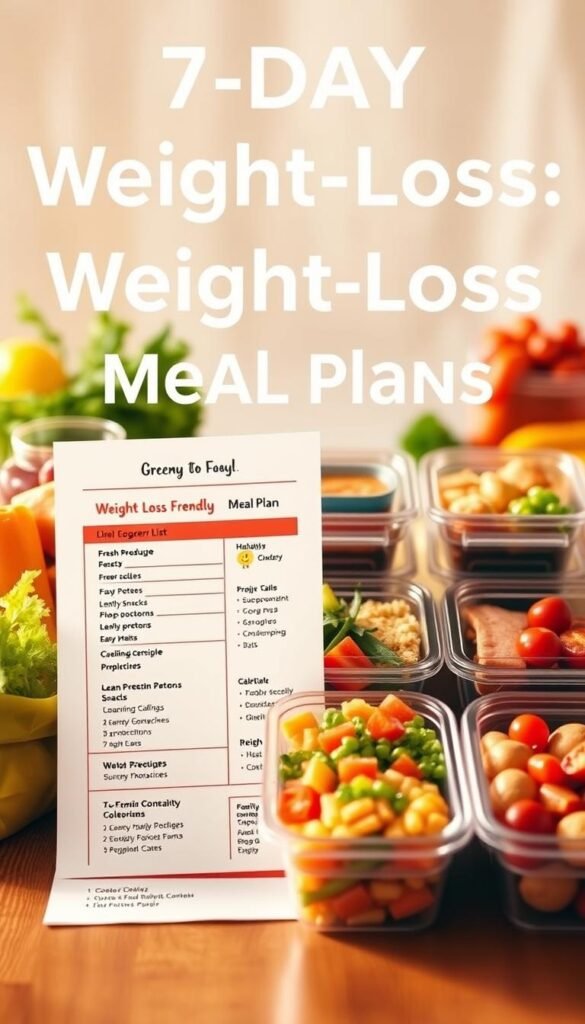
This list is perfect for the 7-Day Beginner Weight-Loss Meal Plan. It makes shopping easy for families. It also matches the portions and recipes in the weekly menus.
How this exact keyword maps to the plan
The plan uses items you can buy in bulk. This way, families can make many meals with fewer products. It includes staples like oats, whole wheat pitas, and Greek yogurt for breakfasts, lunches, dinners, and snacks.
Sample grocery categories
Focus on versatile categories for most recipes. Use whole grains like oats and quinoa for meals. Legumes add fiber and protein. Choose lean proteins like chicken and tofu.
Keep frozen produce for smoothies and sides. Use low-fat dairy or alternatives like Greek yogurt.
- Whole grains: rolled oats, brown rice, whole wheat bread, whole wheat pitas
- Legumes: lentils, canned chickpeas, black beans
- Lean proteins: chicken breast, canned tuna, turkey slices, tofu, eggs, frozen shrimp
- Frozen produce: mixed vegetables, spinach, berries
- Dairy & alternatives: low-fat Greek yogurt, cottage cheese, soy or skim milk
- Pantry extras: canned tomatoes, olive oil, nut butter, canned salmon
Budget-saving tips
Three simple habits can save money without losing nutrition. Buy in bulk for items like oats and rice. Choose frozen fruits and vegetables for better value and nutrition.
Shop store brands and compare prices at Walmart, Kroger, or Target. This helps stretch your budget.
- Buy bulk: rice, oats, lentils, canned tuna in multipacks
- Choose frozen: berries, mixed vegetables, spinach
- Shop store brands: cereal, canned goods, pasta
- Plan portions: check suggested servings like 100–125 g fish or 120 g lean beef to avoid overbuying
Use this list for one weekly shop. Pair it with budget-friendly meal prep ideas. This way, you can cook once and reuse meals for lunches, snacks, and dinners. Small changes at the cart make the 7-Day Beginner Weight-Loss Meal Plan practical for everyday life.
Weekly meal overview: breakfast, lunch, dinner, snacks
This meal plan is simple and easy to follow. It uses a few key ingredients for breakfast, lunch, dinner, and snacks. This makes meal prep simple and supports healthy eating for families and those starting a diet.
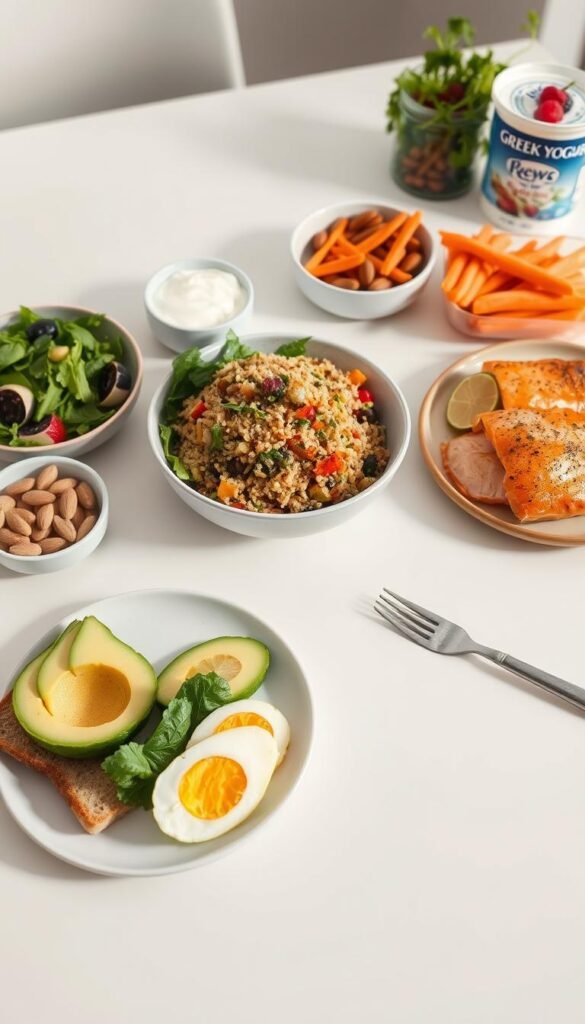
Begin with oats, Greek yogurt, eggs, or smoothies. Try bran flakes with banana and fat-free milk for a quick breakfast. A Greek yogurt parfait with berries and low-sugar granola is great for eating on the go. Quick oats with apple and honey are perfect for a warm breakfast.
For weekends, top a whole-grain waffle with nut butter and banana. For a savory option, try an English muffin with egg, reduced-fat cheese, and spinach. This mix of protein and fiber is great.
Lunch patterns
Lunches can be built with salads, sandwiches, or soups. A turkey pita sandwich or chicken salad with grapes and almonds reheats well. A veggie burger with whole-grain toast or tomato soup with a lean-protein sandwich are also good choices.
Black bean salad or quinoa/black bean bowls are good for meatless days. Lentil soup or tuna salad are high in protein and keep well in the fridge.
Dinner patterns
Dinners are simple: lean protein + whole grain + vegetables. Grill or bake salmon, chicken, shrimp, or turkey and serve with quinoa, brown rice, or a baked sweet potato. Add steamed spinach, green beans, or a mixed coleslaw-like salad.
Stir-fries and sheet-pan meals are quick to prepare. Swap tofu or lentils for animal protein on two nights a week. This keeps the menu healthy and easy for beginners.
Snacks should be small portions of fruit, Greek yogurt, raw veggies with hummus, or a handful of nuts. Use leftovers to avoid waste and make shopping easier.
Day-by-day menu with portions and swaps
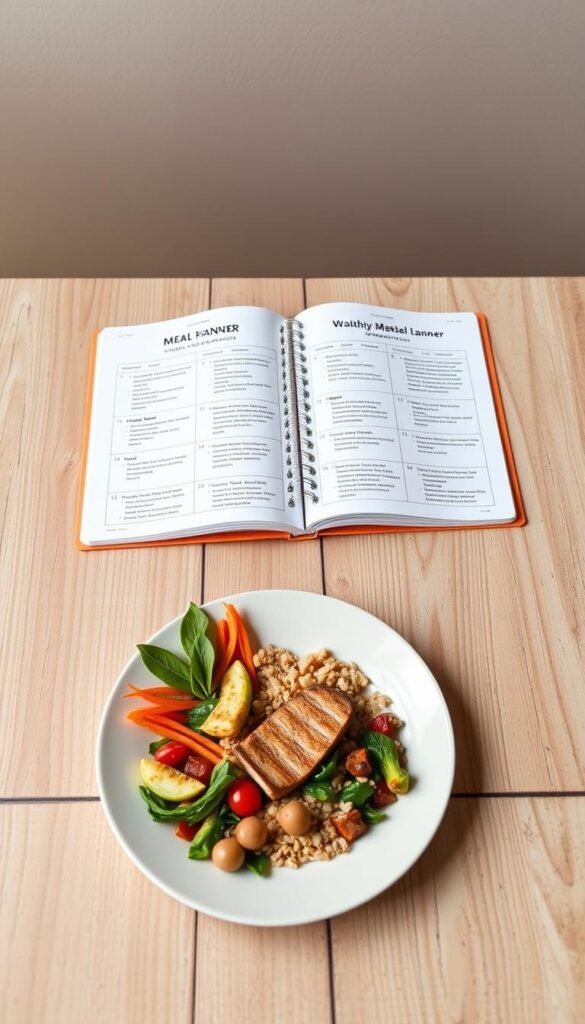
This menu shows three days from a 7-day beginner weight-loss meal plan. It uses common calorie guidance and keeps flavors simple. You can mix and match meals for a budget-friendly plan.
Day One — Breakfast
Start with 3/4 cup bran flakes, 1 banana, and 1 cup fat-free milk. Add fruit for fiber. For a snack or dessert, try 1 oz dark chocolate or a 100–150 calorie ice cream bar.
Day One — Lunch
Make a mini whole wheat pita with 3 oz turkey breast, 1/2 roasted red pepper, 1 tsp mayo, mustard, and lettuce. Add 1 stick part-skim mozzarella and two kiwis on the side. Swap mayo for hummus or turkey for chicken.
Day One — Dinner
Eat 4 oz shrimp, a baked potato with 3 tbsp salsa and 1 tbsp Greek yogurt, and 3 cups steamed spinach. Shrimp should be 3–4 oz for a serving. Swap shrimp for canned salmon or tilapia if it’s expensive.
Day Two — Breakfast
Try a spinach-egg scramble or Greek yogurt with a small fruit portion. Keep protein around 3–4 oz for balance.
Day Two — Lunch
Have 1 cup vegetable soup with a veggie burger on whole-grain toast or an English muffin. Add 1 cup grapes for a side. Swap the veggie burger for a bean-based patty or turkey burger.
Day Two — Dinner
Choose between barbecue-style pork or chicken cutlet with citrus slaw (265 calories per serving). Or, sauté 2 cups spinach with garlic and 1 tsp olive oil, plus 1/2 baked or sweet potato. Keep starchy sides to 1/2 to 1 cup cooked.
Day Three — Breakfast
Make 1/2 cup quick oats with low-fat or unsweetened soy milk, 1/2 apple, 1 tsp honey, and a sprinkle of cinnamon. Swap the apple for frozen berries for similar fiber and less prep.
Day Three — Lunch
Enjoy chicken salad with 4 oz shredded skinless roast chicken, 1/4 cup sliced red grapes, 1 tbsp slivered almonds, 1/4 cup chopped celery, 1 tbsp mayo, and 1 tbsp plain Greek yogurt. Serve over lettuce with one slice multigrain toast. Swap canned tuna or chickpeas for a vegetarian option.
Day Three — Dinner
Have 4 oz steamed shrimp with a baked potato and a side of spinach. Swap shrimp for 3–4 oz tilapia or canned salmon, or use firm tofu for a vegetarian protein. Follow portion guidance of 3–4 oz protein, 1 cup cooked starch or 1 medium potato, and 1–2 cups nonstarchy vegetables.
| Meal | Typical Portion | Example (Day 1–3) | Budget-friendly Swap |
|---|---|---|---|
| Breakfast | 1 serving (3/4 cup cereal or 1/2 cup oats) | Bran flakes + banana; quick oats + apple | Frozen berries instead of fresh fruit |
| Lunch | 3–4 oz protein + 1 small grain or pita | Turkey pita; veggie burger; chicken salad | Rotisserie chicken or canned tuna for protein |
| Dinner | 3–4 oz lean protein + 1 cup starch + 1–3 cups veg | Shrimp + baked potato + spinach; cutlets + slaw | Tilapia, canned salmon, tofu, or legumes |
| Snack / Dessert | 100–150 calories or small serving | Part-skim string cheese; 1 oz dark chocolate | Fresh fruit or air-popped popcorn |
This menu offers clear portion guidance and simple swaps. Use it as a template for a full 7-day beginner weight-loss meal plan. It’s flexible and easy to adjust to your calorie needs.
Budget-friendly meal ideas and low-cost healthy meal prep
It’s possible to eat well without spending a lot. A few key items and simple steps can help. You can make tasty meals that help you lose weight without breaking the bank. This guide will help you create habits that fit your weekly schedule.
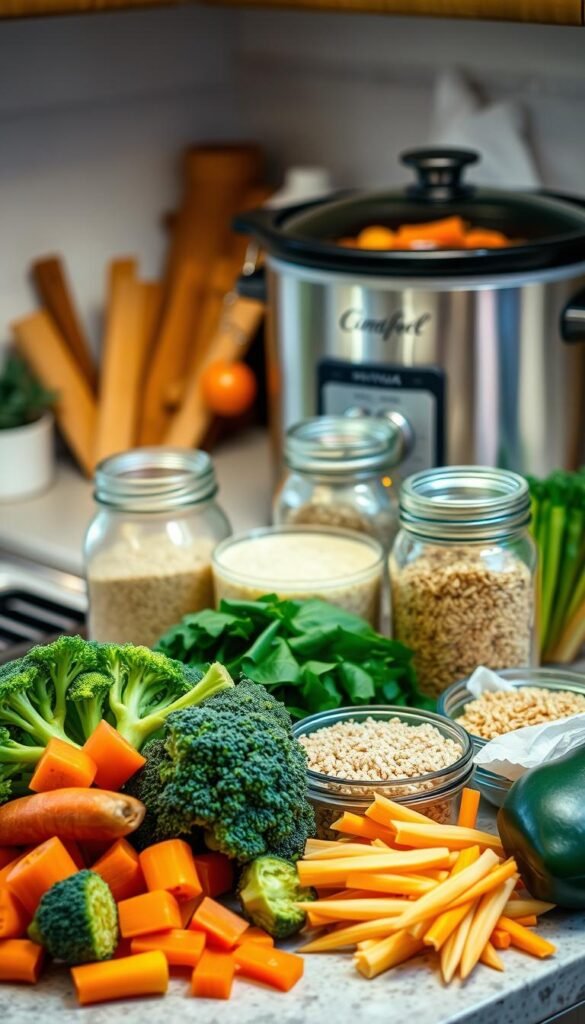
Start with oats, brown rice, lentils, canned tuna, and frozen veggies. These are cheap, last long, and are the base for many meals. Eggs, canned beans, and Greek yogurt add protein without costing too much. Plan your meals around these to save money and time.
Batch cooking and leftover playbook
Make a big pot of lentil soup or chili on Sunday. Roast a chicken to use in salads, wraps, and soups all week. Cook brown rice or quinoa in bulk for easy bowls. Freeze single portions to avoid waste and make prep easy on busy days.
Affordable swaps to keep flavor and nutrition
Use frozen berries for smoothies instead of fresh when they’re out of season. Swap canned fish for fresh in salads and bowls to save money. Choose lean turkey, canned tuna, or more legumes for protein to stretch your budget.
Practical portion and reuse examples
Use 100–125 g portions of fish or lean meat per meal. Turn leftover chicken into a pita or a grain bowl. Make a three-day plan with one batch: soup, grain bowl, and wrap.
Shopping and storage tips
Buy oats, rice, and lentils in bulk at stores like Costco or Trader Joe’s. Opt for store-brand canned goods and frozen veggies to save money. Label and date frozen portions to keep them fresh and organized.
| Staple | Uses | Cost-saver tip |
|---|---|---|
| Oats | Overnight oats, breakfast porridge, blender pancakes | Buy in bulk; portion into single-serve jars |
| Lentils | Soups, stews, taco filling, salads | Dry lentils cost less than canned; cook in large batches |
| Canned tuna or salmon | Salads, rice bowls, sandwiches | Choose water-packed to save calories and cost |
| Brown rice & quinoa | Base for bowls, stir-fries, side dishes | Cook once for multiple meals; freeze portions |
| Frozen vegetables | Roasts, stir-fries, steamed sides | Buy mixed bags to vary meals and reduce waste |
| Eggs | Breakfasts, frittatas, protein add-ons | Multi-egg packs are cheaper per serving |
Beginner-friendly weight loss recipes and family-friendly meals
Start with easy recipes that fit a simple weight loss meal plan and please picky eaters. These dishes use pantry staples and fresh produce for quick weeknight meals. You can adjust portions for family dinners or keep them light for one.
Simple recipes to try
Make a mushroom quinoa burger by mixing cooked quinoa, sautéed mushrooms, an egg, and breadcrumbs. Form patties and pan-sear for a hearty, high-fiber option that pairs well with a side salad.
Prepare a tuna salad using canned tuna, low-fat mayo or nonfat Greek yogurt, diced celery, and lemon. One portion can be about 135 calories when measured, making it a reliable entry in a simple weight loss meal plan.
Mix a black bean salad with half a cup of canned black beans, orange segments, chopped bell pepper, cilantro, and a squeeze of lime. Serve with a small corn tortilla for a bright, protein-rich lunch.
Family-style dinners that scale
Turkey meatballs with whole wheat spaghetti scale easily. Bake meatballs on a sheet pan, toss with tomato sauce, and serve over whole-grain pasta. Swap grated zucchini into the mix to stretch servings and add vegetables.
Grilled chicken fajitas cook quickly and adapt to tastes. Slice chicken, bell peppers, and onions; season with mild chili powder for adults and keep a plain grilled portion for kids. Offer warm tortillas, brown rice, or lettuce cups for variety.
Try quinoa bowls with black beans, corn, cherry tomatoes, and a light vinaigrette when feeding a crowd. These bowls fit many budgets and align with family-friendly meals without extra fuss.
Kid-friendly tweaks and portion tips
Soften seasonings for children by reserving a plain portion of protein or grains before adding spice. Serve deconstructed plates with separate components so kids can choose what they like.
Reduce portion size by using smaller plates and pairing mains with fruit or wholegrain bread. These small changes keep meals satisfying while supporting the goals of a simple weight loss meal plan.
Easy, affordable grocery list and pantry essentials
Stock your fridge and freezer with simple, versatile items. These support the meal plan and make meal prep fast and affordable. Choose low-fat Greek yogurt, eggs, and fat-free milk or unsweetened soy milk for breakfasts and snacks.
Add frozen berries and mixed frozen vegetables to smoothies, oats, and stir-fries. This saves money and reduces waste.
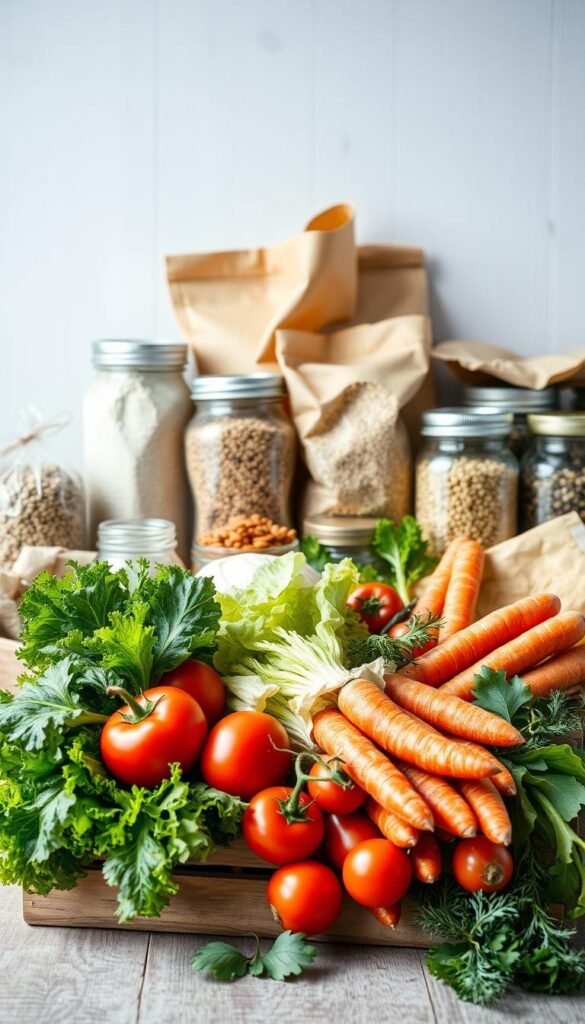
Lean proteins like cooked salmon, shrimp, canned tuna, and frozen chicken breasts freeze well. They last several days. Keep part-skim mozzarella string cheese and reduced-fat cheese for quick snacks.
Fresh fruit like bananas, apples, and kiwis are great for quick snacks.
Stock up on pantry essentials for balanced meals without extra trips. Rolled oats, brown rice, and quinoa are great bases for dinners and breakfasts. Canned beans, canned tomatoes, and lentils offer protein and fiber at low cost.
Whole wheat bread or tortillas, canned salmon, and canned tuna add variety to sandwiches and salads. Buying grains and legumes in bulk lowers costs. Keep nut butters, nuts like almonds and walnuts, and low-sugar granola for snacks and quick energy boosts.
Seasonings and condiments add flavor without breaking the bank. Olive oil, soy sauce, mustard, salsa, cinnamon, cumin, and smoked paprika can transform simple ingredients. Rice vinegar or balsamic and a spoonful of honey add balance when needed.
For smart shopping, choose frozen vegetables over fresh when they’re pricey or out of season. Opt for store brands and compare unit prices. This approach helps you stay on budget while enjoying consistent, affordable meal prep ideas.
Healthy meal planning for beginners: planning, prep, and timing
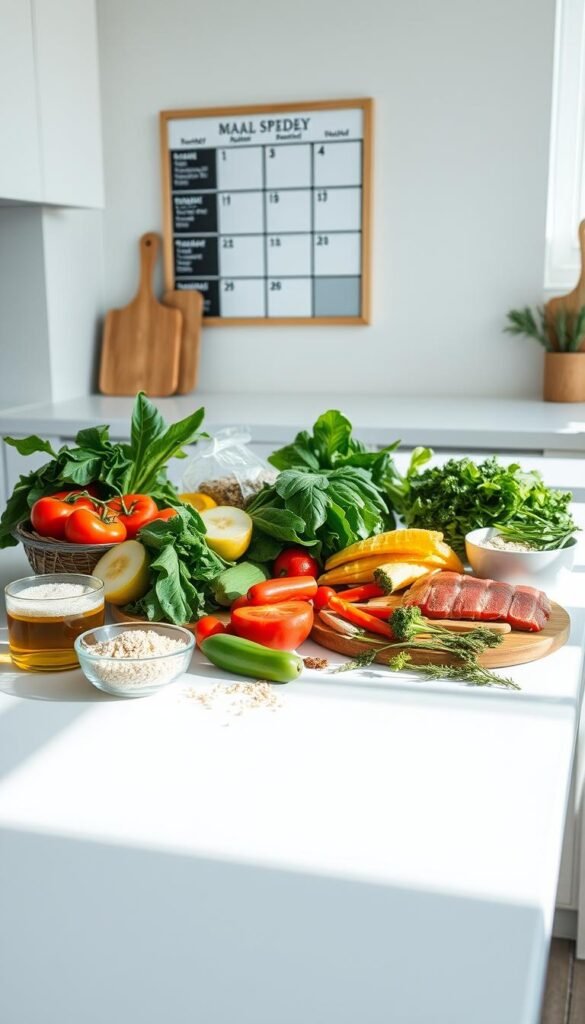
Begin with a simple weekly template that repeats trusted meals. For breakfast, try cereal, yogurt parfaits, oats, and eggs. Lunches can be sandwiches, salads, or a soup with a veggie burger.
Dinners should mix fish, lean poultry, shrimp, and vegetarian options. This approach makes meal planning easy and less stressful for beginners.
Use a printable weekly plan and block time for cooking. Schedule one or two longer sessions each week. These can include roasting chicken, cooking lentil soup, and batch-cooking brown rice or quinoa.
These ready bases help on busy days. They support a quick and easy meal planning guide for working households.
Decide what to cook once and what to prep daily. Cook grains and baked proteins in bulk. Roast a tray of mixed vegetables for the week.
Prep daily items like fresh salads, fruit, and yogurt parfaits the night before. This balance ensures efficiency and fresh meals.
Adopt time-saving shortcuts that fit your budget. Keep frozen vegetables, pre-cooked grains, canned tuna, and frozen prawns on hand. Use pre-washed salad mixes and low-sodium store broths to cut hands-on time.
These choices fuel budget-friendly meal prep ideas while preserving nutrition.
Follow a simple meal prep schedule example to stay on track:
- Sunday: Batch-cook grains, roast chicken, portion snacks.
- Wednesday: Quick refresh—steam frozen veggies, boil eggs.
- Daily: Assemble salads, reheat portions, slice fruit for snacks.
Use one-pan or sheet-pan dinners to save time and dishes. Roast salmon or chicken with potatoes and green beans on a single sheet. Swap proteins or vegetables into the same template to keep variety without new recipes.
This approach fits both a quick and easy meal planning guide and long-term habit building.
Match planning to your activity level by adjusting portion sizes and energy-dense choices. Active days can include an extra grain serving or a higher-protein snack. Lighter days can rely more on vegetables and lean proteins.
Planning this way keeps the weekly rotation flexible for real life.
Keep a short grocery list that repeats staples. Oats, brown rice, canned beans, frozen vegetables, eggs, and plain Greek yogurt form a versatile foundation. Reuse these items across templates to lower waste and support budget-friendly meal prep ideas without losing flavor.
Portion control, calorie awareness, and nutrient balance
Start with clear examples of portions to make a simple weight loss meal plan practical. A typical lunch might include 3 ounces of turkey breast in a pita. Dinners often use 4 ounces of steamed shrimp or shredded roast chicken over 1 cup of cooked quinoa. Breakfasts can be 1/2–1 cup of oats or 1/2–1 cup cereal paired with fruit.
Vegetables provide volume: aim for 1–3 cups per meal to stay full without extra calories.

Another practical guide is 3–4 ounces (85–115 g) of cooked protein per meal and 1/2–1 cup cooked whole grains. Snacks that give calorie cues help with calorie awareness, such as a 1-ounce piece of dark chocolate or a 100–150 calorie ice cream bar. Dietitian-designed menus show fish servings near 100–125 g and lean beef at about 120 g alongside 1 cup cooked brown rice and 1–1.5 cups cooked vegetables.
Adjust portions to match activity. Active people can increase grains and protein for extra energy. Sedentary people should lower added fats and grain portions to reduce total calories. A 1,200 kcal/day low-budget model highlights how many meals fit a modest target, while reminding readers that needs vary by age and activity level.
Balance macronutrients across the day to reduce cravings and support steady energy. Combine lean protein, complex carbs, and a small amount of healthy fat at each meal. That mix improves satiety and keeps blood sugar stable, which helps adherence to any simple weight loss meal plan.
Use these portion rules as a flexible template. Swap protein types, change whole grains, and pile on non-starchy vegetables to suit taste and budget. Keep portion control and nutrient balance central to meal choices while practicing consistent calorie awareness for steady progress.
Simple weight loss meal plan variations: vegetarian, high-protein, family-friendly
This guide shows how to adjust a simple weight loss meal plan for different diets. You can make it vegetarian, add more protein, or make it family-friendly. Just make small changes to keep it tasty and easy to make.
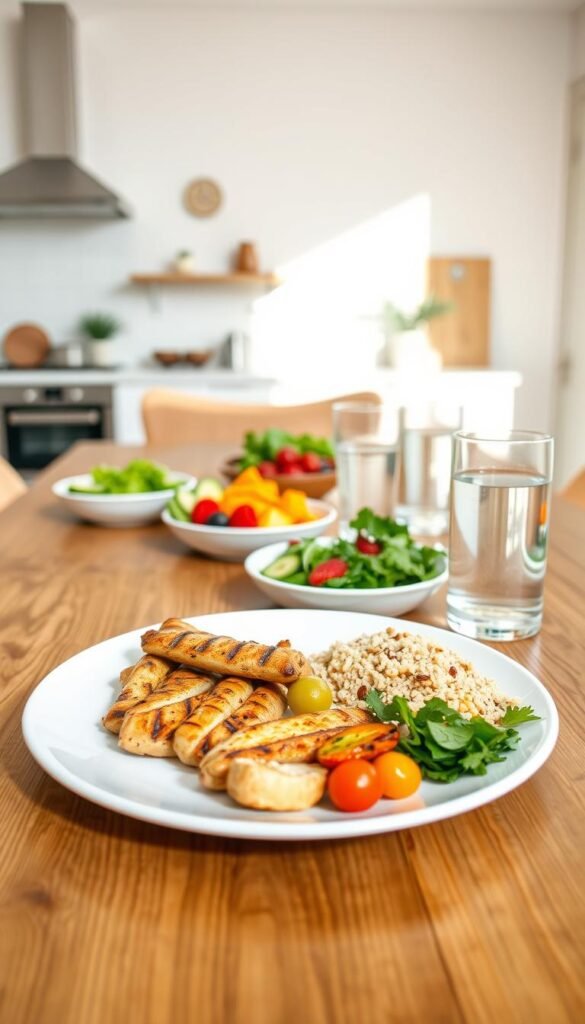
Vegetarian swaps
Replace meat with tofu, lentils, chickpeas, canned beans, or edamame. For example, one chicken portion is like 1 cup cooked lentils plus extra veggies. Try hummus or a mushroom-quinoa burger for a filling lunch.
Higher-protein options
Use Greek yogurt, cottage cheese, lean poultry, or canned tuna for more protein. Start breakfasts with Greek yogurt bowls, lunches with tuna or grilled chicken salads, and dinners with lean poultry. Snacks like cottage cheese or boiled eggs also help meet protein needs.
Family-friendly adaptations
Make double batches of dinners like turkey meatballs or grilled chicken fajitas. This saves time and is easy to scale up. Offer build-your-own bowls with brown rice or quinoa, a protein, veggies, and a mild sauce. This way, everyone can make their own meal. Keep spices mild and include small treats now and then.
Below is a compact comparison to help pick swaps and plan meals quickly.
| Goal | Protein Sources | Sample Meal | Quick Tip |
|---|---|---|---|
| Vegetarian | Tofu, lentils, chickpeas, black beans | Mushroom-quinoa burger, black bean salad, lentil soup | Mix legumes with veggies for volume and fiber |
| High-protein | Greek yogurt, cottage cheese, canned tuna, lean poultry | Greek yogurt parfait, tuna salad pita, grilled chicken bowl | Include a protein-rich snack midafternoon |
| Family-friendly | Ground turkey, chicken, beans, eggs | Turkey meatballs with whole wheat spaghetti, fajita bowls | Cook double batches; let family build their plates |
Quick and easy meal planning guide: daily checklist and shopping strategy
Use this quick and easy meal planning guide to make meal prep simple. Start with a short checklist each week. Follow a smart shopping strategy at the store. Keep a practical sample one-week shopping list handy for efficient trips.
Weekly checklist
- Plan menu: pick breakfasts, lunches, dinners, and snacks from the sample menus.
- Make grocery list: group items by fridge, freezer, pantry to speed the trip.
- Prep staples: cook brown rice or quinoa, roast chicken breast, boil eggs, chop vegetables.
Smart shopping strategy
- Compare unit prices to find the best value for items like oats, rice, and canned goods.
- Choose store brands and bulk bags for grains and legumes to save money.
- Buy frozen fruits and vegetables for nutrition and lower cost with less waste.
- Plan meals around weekly sales and bring a focused list to avoid impulse buys.
Sample one-week shopping list
Below is a complete list based on the menus. Quantities suit a single adult for seven days; adjust for families.
| Category | Items | Suggested Qty |
|---|---|---|
| Breakfast staples | Bran flakes, quick oats, wholegrain cereal, muesli, low-fat milk or soy milk, Greek yogurt | 1 box cereal, 1 bag oats, 1 quart milk, 32 oz yogurt |
| Breads & grains | Whole wheat pitas, whole grain bread, mini English muffins, brown rice, quinoa | 1 pack pitas, 1 loaf bread, 1 pack muffins, 2–3 lb rice/quinoa bulk |
| Proteins | 6–8 eggs, 2–3 lb chicken breast, 3–4 cans tuna or salmon, canned beans, lentils | 8 eggs, 2–3 lb chicken, 3 cans tuna, 2 cans beans, 2–3 cups dry lentils |
| Produce | Bananas, apples, berries or frozen berries, grapes, kiwis, sweet potatoes, russet potatoes, spinach, mixed salad greens, peppers, tomatoes, onions, garlic | 7 bananas, 4 apples, 1 lb berries or 1 bag frozen, 2 lb potatoes, 1 bag spinach, 3 peppers |
| Frozen & canned | Frozen waffles, frozen mixed vegetables, canned tomatoes, canned legumes | 1 box waffles, 2–3 lb frozen veg, 2 cans tomatoes, 2–3 cans legumes |
| Dairy & alternatives | Low-fat milk, soy milk, part-skim cheeses, low-fat yogurt tubs | 1 quart milk, 8 oz cheese, 32 oz yogurt |
| Pantry & condiments | Nut butter, olive oil, vinegar, basic spices, whole grain bread | 1 jar nut butter, 16 oz oil, salt, pepper, 1 loaf bread |
| Snacks | Nuts, fresh fruit, portioned yogurt, whole fruit | 8–12 oz nuts, 7 pieces fruit, 4 single yogurts |
Follow the weekly checklist, use the shopping strategy, and keep the sample one-week shopping list close when you shop. This routine saves time, cuts waste, and makes it easy to stick to healthy meals all week.
Conclusion
This 7-day beginner weight-loss meal plan shows that eating healthy can be easy, budget-friendly, and good for the whole family. It includes clear portion sizes, snack ideas like yogurt parfaits, and simple meals. These include oatmeal, tuna or chicken salads, and lean seafood or poultry dinners.
Using a simple grocery list helps keep costs low. It focuses on whole grains, legumes, lean proteins, and frozen produce. Batch cooking, buying in bulk, and using leftovers are smart ways to save money and reduce waste.
For beginners, healthy meal planning works best when it matches your activity level, age, and health needs. Dietitian-backed templates help keep energy levels stable and allow for small treats. If you need specific advice, talk to a Registered Dietitian or your healthcare provider to make it fit your needs.
FAQ
What is the 7-day beginner weight-loss meal plan: easy, affordable?
FAQ
What is the 7-day beginner weight-loss meal plan: easy, affordable?
Why does a 7-day beginner weight-loss meal plan work for beginners?
FAQ
What is the 7-day beginner weight-loss meal plan: easy, affordable?
FAQ
What is the 7-day beginner weight-loss meal plan: easy, affordable?
How does “7-Day Beginner Weight-Loss Meal Plan Easy, affordable grocery list Family-friendly meals” map to the plan?
FAQ
What is the 7-day beginner weight-loss meal plan: easy, affordable?
FAQ
What is the 7-day beginner weight-loss meal plan: easy, affordable?
What should I buy for groceries to follow this plan?
FAQ
What is the 7-day beginner weight-loss meal plan: easy, affordable?
FAQ
What is the 7-day beginner weight-loss meal plan: easy, affordable?
What do weekly meals look like—breakfast, lunch, dinner and snacks?
FAQ
What is the 7-day beginner weight-loss meal plan: easy, affordable?
FAQ
What is the 7-day beginner weight-loss meal plan: easy, affordable?
Can you give examples from the day-by-day menu with portions and swaps?
FAQ
What is the 7-day beginner weight-loss meal plan: easy, affordable?
FAQ
What is the 7-day beginner weight-loss meal plan: easy, affordable?
What are budget-friendly meal ideas and low-cost healthy meal-prep tips?
FAQ
What is the 7-day beginner weight-loss meal plan: easy, affordable?
FAQ
What is the 7-day beginner weight-loss meal plan: easy, affordable?
Are there beginner-friendly weight loss recipes and family-friendly meal ideas?
FAQ
What is the 7-day beginner weight-loss meal plan: easy, affordable?
FAQ
What is the 7-day beginner weight-loss meal plan: easy, affordable?
What is a quick and easy meal-planning checklist and shopping strategy?
FAQ
What is the 7-day beginner weight-loss meal plan: easy, affordable?
FAQ
What is the 7-day beginner weight-loss meal plan: easy, affordable?
Check My Other Blog Post About Weight Loss Here